Skip to content

Proposed version

Master the Curriculum

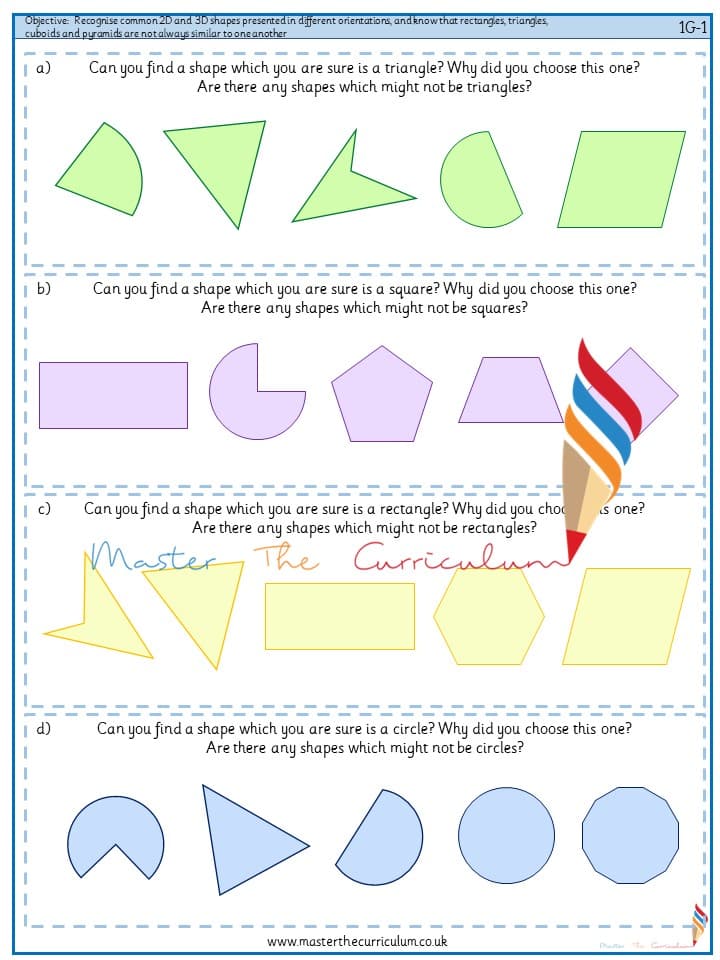
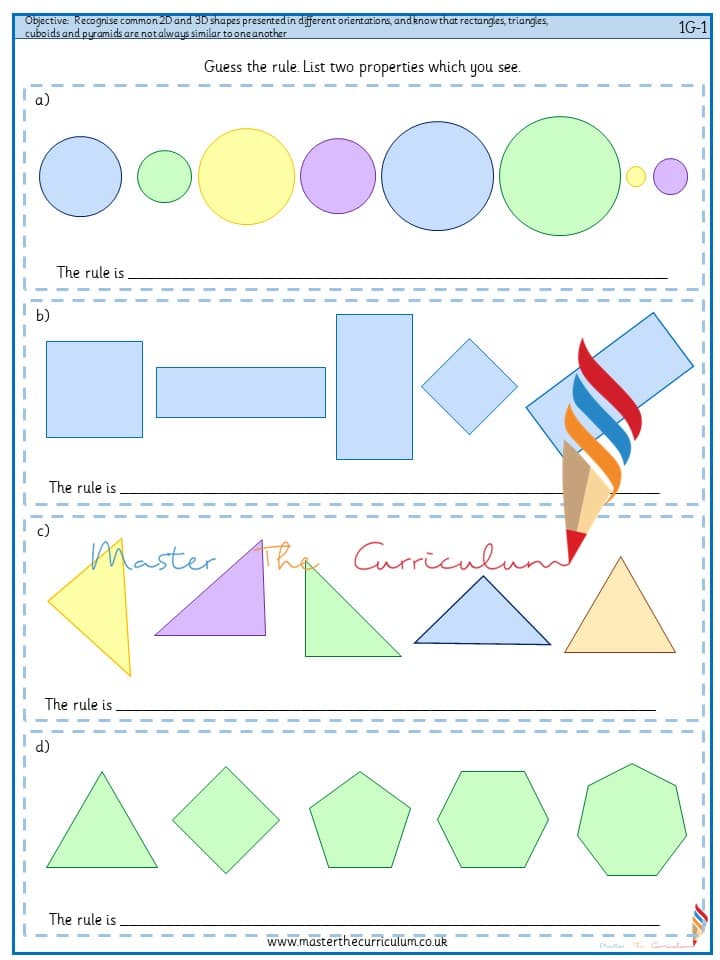
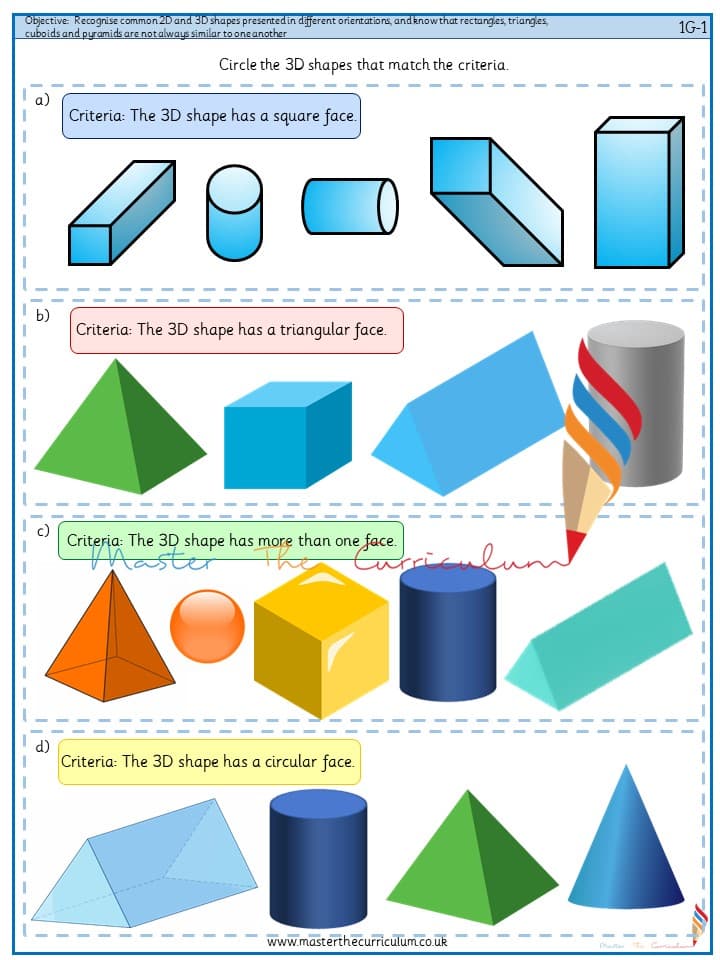
Recognise common 2D and 3D shapes presented in different orientations, and know that rectangles, triangles, cuboids and pyramids are not always similar to one another

Year 1Geometry4 resources teach this

What this means, in plain words

An angle measures an amount of turn, in degrees, with a full turn being 360.

Shape work names shapes by their properties, sides, corners and faces, rather than by what they look like.

Tagged to Year 1 in geometry. 4 resources in the library teach it.

The resources that teach it

Every one differentiated three ways, editable in PowerPoint.

Geometry

Y1

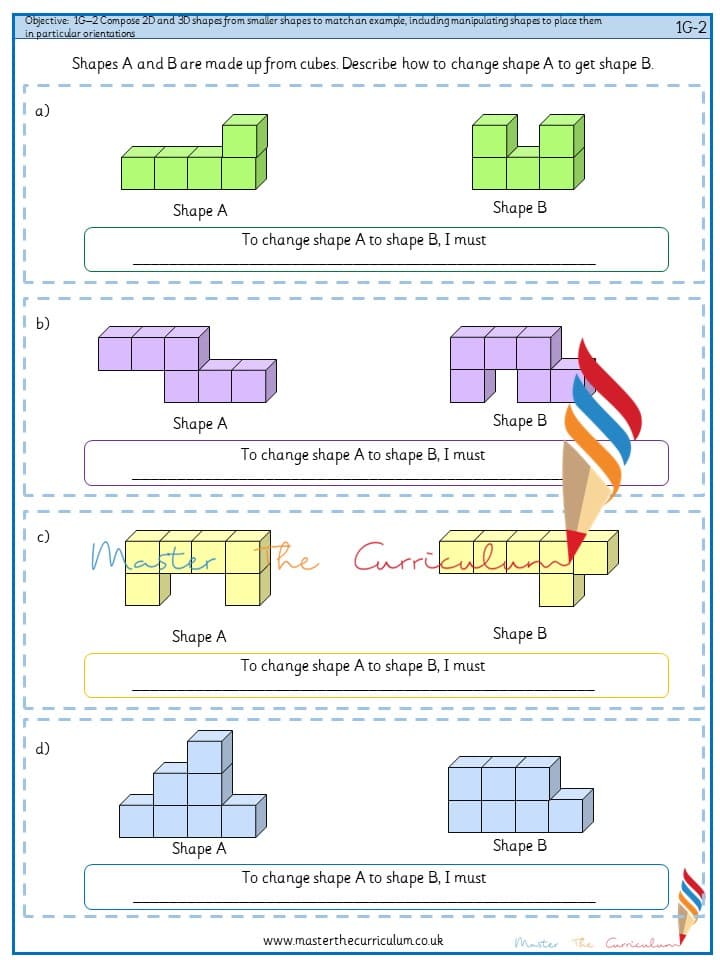
Compose 2D and 3D shapes from smaller shapes to match an example, including manipulating shapes to place them in particular orientations (1)
masterthecurriculum.co.uk
Included with membership

Geometry

Y1

Recognise common 2D and 3D shapes presented in different orientations, and know that rectangles, triangles, cuboids and pyramids are not always similar to one another (1)

masterthecurriculum.co.uk
4.645 reviews
Included with membership

Geometry

Y1

Recognise common 2D and 3D shapes presented in different orientations, and know that rectangles, triangles, cuboids and pyramids are not always similar to one another (2)

masterthecurriculum.co.uk
4.637 reviews
Included with membership

Geometry

Y1

Recognise common 2D and 3D shapes presented in different orientations, and know that rectangles, triangles, cuboids and pyramids are not always similar to one another (3)

masterthecurriculum.co.uk
Included with membership
Editable worksheetsWord and PowerPoint, so you can change anythingWhite Rose supportingFollows the small steps you already plan fromDownloadable lesson plansPlanning, slides and worksheets for every stepReasoning and problem solvingBuilt into every step, not sold separately

A free resource every Friday

One email a week, for the year group you actually teach. Unsubscribe in a click.

Year group you teach