Skip to content

Proposed version

Master the Curriculum

Addition & Subtraction

Y2

Add and subtract within 100 by applying related one-digit addition and subtraction facts: add and subtract any 2 two-digit numbers (2)

masterthecurriculum.co.uk

Preview only. The download is a fully editable file.

See inside

1 page shown before you download

Cover of Add and subtract within 100 by applying related one-digit addition and subtraction facts: add and subtract any 2 two-digit numbers (2)1Cover
Cover and first page

The rest of the pack

Planning, teaching slides and all three worksheet levels come with the download.

Year 2Addition & Subtraction

Add and subtract within 100 by applying related one-digit addition and subtraction facts: add and subtract any 2 two-digit numbers (2)

Included with membership

Unlock with membership

Already a member? Sign in and it downloads from this page.

Keep it for later and group it with the rest of the block. No account needed to start.

  • Fully editable Word or PowerPoint file
  • Differentiated three ways
  • Instant download, no watermark

About this resource

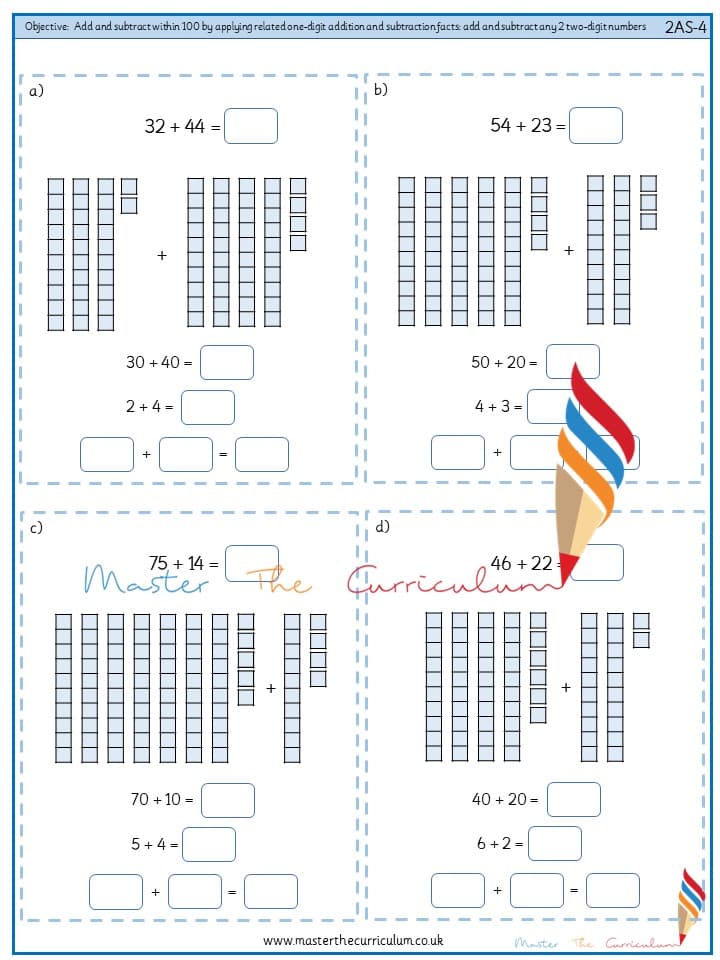
As for 2AS–3, Dienes and partitioning diagrams can be used to support pupils as they learn about strategies for carrying out these calculations. To add 2 two-digit numbers, pupils need to combine one-digit addition facts with their understanding of two-digit place value. Pupils should first learn to add 2 multiples of ten and 2 ones before moving on to the addition of 2 two-digit numbers, for example: 40 + 20 + 5 + 3 = 60 + 8 = 68 40 + 5 + 20 + 3 = 60 + 8 = 68 45 + 23 = 60 + 8 = 68 Language focus: “First I partition both numbers. Then I add the tens. Then I add the ones. Then I combine all of the tens and all of the ones.” Pupils can then learn to be more efficient, by partitioning just one addend, for example: 45 + 23 = 45 + 20 + 3 = 65 + 3 When pupils learn to subtract one two-digit number from another, the progression is similar to that for addition. Pupils can first learn to subtract a multiple of ten and some ones from a two-digit number, and then connect this to the subtraction of one two-digit number from another. There is an important difference compared to the addition strategy: pupils should not partition both two-digit numbers for subtraction as this can lead to errors, or calculations involving negative numbers, when bridging a multiple of 10, for example: 63 – 17 60 – 10 + 7 – 3 63 – 17 = 60 – 10 + 3 – 7 You can find out more about fluency and recording for addition and subtraction of two-digit numbers here in the calculation and fluency section: 2AS–4Read more

As for 2AS–3, Dienes and partitioning diagrams can be used to support pupils as they learn about strategies for carrying out these calculations. To add 2 two-digit numbers, pupils need to combine one-digit addition facts with their understanding of two-digit place value. Pupils should first learn to add 2 multiples of ten and 2 ones before moving on to the addition of 2 two-digit numbers, for example: 40 + 20 + 5 + 3 = 60 + 8 = 68 40 + 5 + 20 + 3 = 60 + 8 = 68 45 + 23 = 60 + 8 = 68 Language focus: “First I partition both numbers. Then I add the tens. Then I add the ones. Then I combine all of the tens and all of the ones.” Pupils can then learn to be more efficient, by partitioning just one addend, for example: 45 + 23 = 45 + 20 + 3 = 65 + 3 When pupils learn to subtract one two-digit number from another, the progression is similar to that for addition. Pupils can first learn to subtract a multiple of ten and some ones from a two-digit number, and then connect this to the subtraction of one two-digit number from another. There is an important difference compared to the addition strategy: pupils should not partition both two-digit numbers for subtraction as this can lead to errors, or calculations involving negative numbers, when bridging a multiple of 10, for example: 63 – 17 60 – 10 + 7 – 3 63 – 17 = 60 – 10 + 3 – 7 You can find out more about fluency and recording for addition and subtraction of two-digit numbers here in the calculation and fluency section: 2AS–4

Show less

What you get, 2 files

  • PDFActivity
  • PPTXActivity, editable

The standard small step pack, as her own modules ship it. We do not print page counts here, because her catalogue does not publish them and a guessed number is worse than none.

★★★ Differentiated three ways
  • Working towardsScaffolded, with the model or the bar already drawn.
  • Working withinThe expected standard for the year group.
  • Greater depthReasoning and explaining, not just more of the same.

Her own system, with the star count repeated in every worksheet header so a child can be handed the right sheet without a word.

More addition & subtraction for Year 2

Addition & Subtraction

Y2

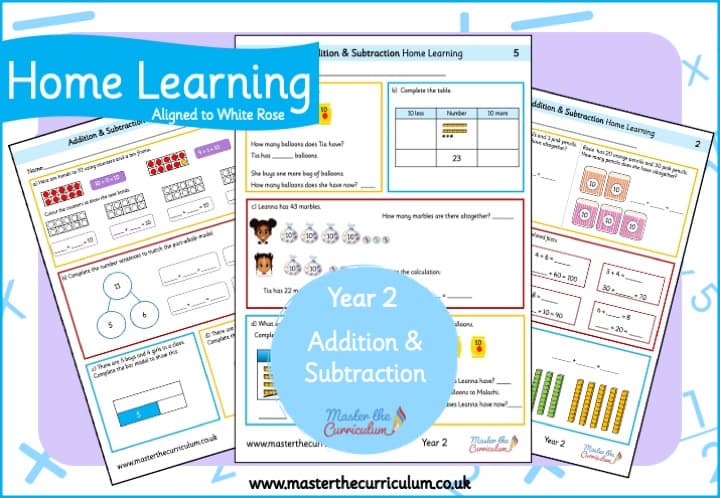
Year 2 Addition and Subtraction Home Learning

masterthecurriculum.co.uk
4.948 reviews
Included with membership

Addition & Subtraction

Y2

Crack the Code Using Number Facts

masterthecurriculum.co.uk
4.620 reviews
Included with membership
Editable worksheetsWord and PowerPoint, so you can change anythingWhite Rose supportingFollows the small steps you already plan fromDownloadable lesson plansPlanning, slides and worksheets for every stepReasoning and problem solvingBuilt into every step, not sold separately

A free resource every Friday

One email a week, for the year group you actually teach. Unsubscribe in a click.

Year group you teach