Skip to content

Proposed version

Master the Curriculum

Geometry

Y5

Compare angles, estimate and measure angles in degrees (°) and draw angles of a given size (2)

masterthecurriculum.co.uk

Preview only. The download is a fully editable file.

See inside

1 page shown before you download

Cover of Compare angles, estimate and measure angles in degrees (°) and draw angles of a given size (2)1Cover
Cover and first page

The rest of the pack

Planning, teaching slides and all three worksheet levels come with the download.

Year 5Geometry

Compare angles, estimate and measure angles in degrees (°) and draw angles of a given size (2)

4.257 reviews

Included with membership

Unlock with membership

Already a member? Sign in and it downloads from this page.

Keep it for later and group it with the rest of the block. No account needed to start.

  • Fully editable Word or PowerPoint file
  • Differentiated three ways
  • Instant download, no watermark

About this resource

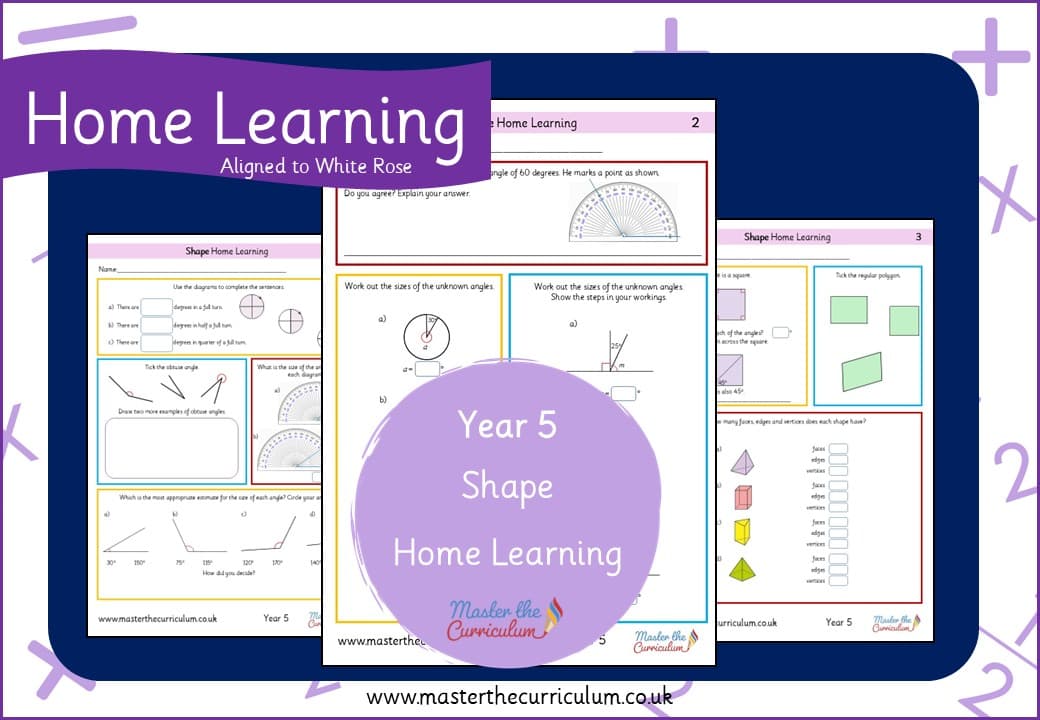
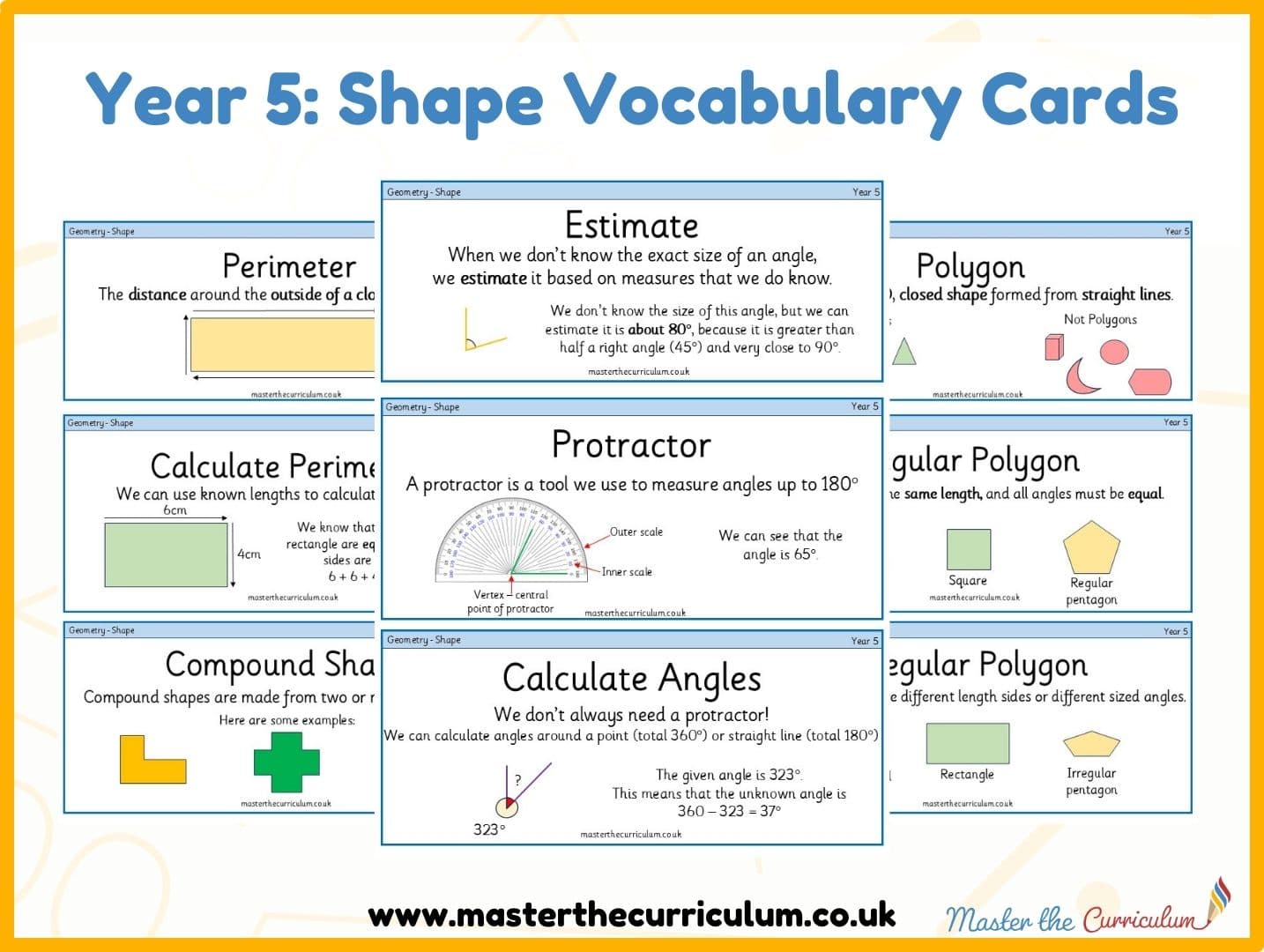
In year 3, pupils learnt to identify right angles and to determine whether a given angle is larger or smaller than a right angle (3G–1). Pupils should now compare angles, including the internal angles of polygons, and be able to identify the largest and smallest angles when there is a clear visual difference. Pupils should be able to use the terms acute, obtuse and reflex when describing and comparing angles, and use conventional markings (arcs) to indicate angles. Language focus “An acute angle is smaller than a right angle.” “An obtuse angle is larger than a right angle but less than the angle on a straight line.” “A reflex angle is larger than the angle on a straight line, but less than the angle for a full turn.” Pupils must learn that we can measure the size of angles just as we can measure the length of sides. They should learn that the unit used is called degrees and indicated by the ° symbol. Pupils should know that there are 360° in a full turn, 90° in a quarter turn or right angle, and 180° in a half turn or on a straight line. Pupils must know that the position of the arc indicating an angle does not affect the size of the angle, which is determined by the amount of turn between the two lines. Similarly, they should know that the length of the lines does not affect the size of the angle between them Language focus: “D is the smallest angle. It is an acute angle.” “C is the largest angle. It is a reflex angle” Before pupils learn to use protractors, they should learn to estimate and approximate common angles, and angles that are close to them, including 90˚, 180˚, other multiples of 10˚, and 45˚. They should use sets of ‘standard angle’ measuring tools (for example, cut out from card) for support in approximating, and to check estimates. Once pupils can make reasonable estimates of angle size, they must learn to make accurate measurements, using a protractor, for angles up to 180˚. It is good practice to make an estimate before taking an accurate measuremeRead more

In year 3, pupils learnt to identify right angles and to determine whether a given angle is larger or smaller than a right angle (3G–1). Pupils should now compare angles, including the internal angles of polygons, and be able to identify the largest and smallest angles when there is a clear visual difference. Pupils should be able to use the terms acute, obtuse and reflex when describing and comparing angles, and use conventional markings (arcs) to indicate angles. Language focus “An acute angle is smaller than a right angle.” “An obtuse angle is larger than a right angle but less than the angle on a straight line.” “A reflex angle is larger than the angle on a straight line, but less than the angle for a full turn.” Pupils must learn that we can measure the size of angles just as we can measure the length of sides. They should learn that the unit used is called degrees and indicated by the ° symbol. Pupils should know that there are 360° in a full turn, 90° in a quarter turn or right angle, and 180° in a half turn or on a straight line. Pupils must know that the position of the arc indicating an angle does not affect the size of the angle, which is determined by the amount of turn between the two lines. Similarly, they should know that the length of the lines does not affect the size of the angle between them Language focus: “D is the smallest angle. It is an acute angle.” “C is the largest angle. It is a reflex angle” Before pupils learn to use protractors, they should learn to estimate and approximate common angles, and angles that are close to them, including 90˚, 180˚, other multiples of 10˚, and 45˚. They should use sets of ‘standard angle’ measuring tools (for example, cut out from card) for support in approximating, and to check estimates. Once pupils can make reasonable estimates of angle size, they must learn to make accurate measurements, using a protractor, for angles up to 180˚. It is good practice to make an estimate before taking an accurate measureme

Show less

What you get, 2 files

  • PDFActivity
  • PPTXActivity, editable

The standard small step pack, as her own modules ship it. We do not print page counts here, because her catalogue does not publish them and a guessed number is worse than none.

★★★ Differentiated three ways
  • Working towardsScaffolded, with the model or the bar already drawn.
  • Working withinThe expected standard for the year group.
  • Greater depthReasoning and explaining, not just more of the same.

Her own system, with the star count repeated in every worksheet header so a child can be handed the right sheet without a word.

What teachers said after they used it

All reviews →
4.257 verified reviewsWe ask once, seven days after the download, and one tap is enough.
Beth NightingaleYear 1 teacher, Poplar Farm School, GranthamVerified download, 13 January 2026

Fine, though the font is small for my class.

The maths is right and the sequence is sensible. Several of my children needed it enlarged to A3, which is easy enough but worth knowing before you print thirty.

4 teachers found this helpful
Joanne PicklesYear 3 teacher, Crossflatts Primary, BingleyVerified download, 5 March 2026

Printed it at eight on a Sunday and taught it on the Monday.

No editing, no reformatting, no hunting for the answers. The three levels are on separate pages, which sounds obvious until you have used the sites where they are not.

10 teachers found this helpful

Michael FerrisMaths lead, Cheadle Heath Primary, StockportVerified download, 16 February 2026

Matches our White Rose planning almost week for week.

I stopped adapting things from three different sites and now start here. The odd week does not line up exactly, but the small step it covers is always somewhere in the same block.

8 teachers found this helpful

More geometry for Year 5

Editable worksheetsWord and PowerPoint, so you can change anythingWhite Rose supportingFollows the small steps you already plan fromDownloadable lesson plansPlanning, slides and worksheets for every stepReasoning and problem solvingBuilt into every step, not sold separately

A free resource every Friday

One email a week, for the year group you actually teach. Unsubscribe in a click.

Year group you teach