Skip to content

Proposed version

Master the Curriculum

Number & Place Value

Y3

L4 Use Place Value and Rounding to Solve Problems

masterthecurriculum.co.uk

Preview only. The download is a fully editable file.

See inside

1 page shown before you download

Cover of L4 Use Place Value and Rounding to Solve Problems1Cover
Cover and first page

The rest of the pack

Planning, teaching slides and all three worksheet levels come with the download.

Year 3Number & Place Value

L4 Use Place Value and Rounding to Solve Problems

A Year 3 maths lesson on using rounding to simplify addition and subtraction calculations . Pupils learn how to round numbers to make calculations easier and adjust their answers to keep them exact.

Included with membership

Unlock with membership

Already a member? Sign in and it downloads from this page.

Keep it for later and group it with the rest of the block. No account needed to start.

  • Fully editable Word or PowerPoint file
  • Differentiated three ways
  • Instant download, no watermark

About this resource

This Year 3 maths lesson on rounding to simplify calculations helps pupils develop efficient strategies for solving addition and subtraction problems while still finding exact answers . Children learn how rounding can make numbers easier to work with and how to adjust their calculations afterwards so the final result remains accurate. The lesson begins with a starter activity revisiting previous Year 3 learning on addition, subtraction, place value and fractions . Pupils explore how numbers can be rounded and discuss the changes that are made when rounding to a friendly number. For example, they consider how 498 can be adjusted by adding 2 to make 500 . Pupils also look at cases such as 481 , where the number could be rounded to either 480 or 500 , and discuss how the most helpful rounding choice depends on the calculation being solved. During the main teaching input , pupils learn that rounding can simplify calculations, but unlike estimation lessons, they must adjust their answers afterwards to make them exact. The teacher models the thought process behind rounding within a calculation. For example, 398 + 27 can be transformed into 400 + 25 , making the calculation easier while keeping the total the same. Pupils are encouraged to think carefully about which number to round , recognising that rounding 398 is more helpful than rounding the smaller number. Children then practise this reasoning through paired and independent examples , paying close attention to the mathematical operation involved and the adjustments required to maintain accuracy. In the independent activity , pupils choose at least three calculations from a selection and solve them using rounding as their main strategy . They record their working clearly in their maths books, showing how the numbers were adjusted and how they ensured the final answer remained correct. Pupils may also use concrete resources such as base ten blocks to check their calculations and reinforce their understanding of place vRead more

This Year 3 maths lesson on rounding to simplify calculations helps pupils develop efficient strategies for solving addition and subtraction problems while still finding exact answers . Children learn how rounding can make numbers easier to work with and how to adjust their calculations afterwards so the final result remains accurate. The lesson begins with a starter activity revisiting previous Year 3 learning on addition, subtraction, place value and fractions . Pupils explore how numbers can be rounded and discuss the changes that are made when rounding to a friendly number. For example, they consider how 498 can be adjusted by adding 2 to make 500 . Pupils also look at cases such as 481 , where the number could be rounded to either 480 or 500 , and discuss how the most helpful rounding choice depends on the calculation being solved. During the main teaching input , pupils learn that rounding can simplify calculations, but unlike estimation lessons, they must adjust their answers afterwards to make them exact. The teacher models the thought process behind rounding within a calculation. For example, 398 + 27 can be transformed into 400 + 25 , making the calculation easier while keeping the total the same. Pupils are encouraged to think carefully about which number to round , recognising that rounding 398 is more helpful than rounding the smaller number. Children then practise this reasoning through paired and independent examples , paying close attention to the mathematical operation involved and the adjustments required to maintain accuracy. In the independent activity , pupils choose at least three calculations from a selection and solve them using rounding as their main strategy . They record their working clearly in their maths books, showing how the numbers were adjusted and how they ensured the final answer remained correct. Pupils may also use concrete resources such as base ten blocks to check their calculations and reinforce their understanding of place v

Show less

What you get, 6 files

  • PDFPlanning
  • PPTXPlanning, editable
  • PDFTeaching slides
  • PPTXTeaching slides, editable
  • PDFWorksheets, all three levels
  • PPTXWorksheets, editable

The standard small step pack, as her own modules ship it. We do not print page counts here, because her catalogue does not publish them and a guessed number is worse than none.

★★★ Differentiated three ways
  • Working towardsScaffolded, with the model or the bar already drawn.
  • Working withinThe expected standard for the year group.
  • Greater depthReasoning and explaining, not just more of the same.

Her own system, with the star count repeated in every worksheet header so a child can be handed the right sheet without a word.

The rest of this block

Number & Place Value, Year 316 numbered lessons

  1. Lesson 2Year 3: Place Value: Lesson 2 – Represent Numbers to 1,000
  2. Lesson 3Year 3: Place Value: Lesson 3 – 100s, 10s, and 1s
  3. Lesson 4 · you are hereUse Place Value and Rounding to Solve Problems
  4. Lesson 5Year 3: Place Value: Lesson 5 – Number Line
  5. Lesson 6Year 3: Place Value: Lesson 6 – Number Line to 1000

More number & place value for Year 3

Number & Place Value

Y3

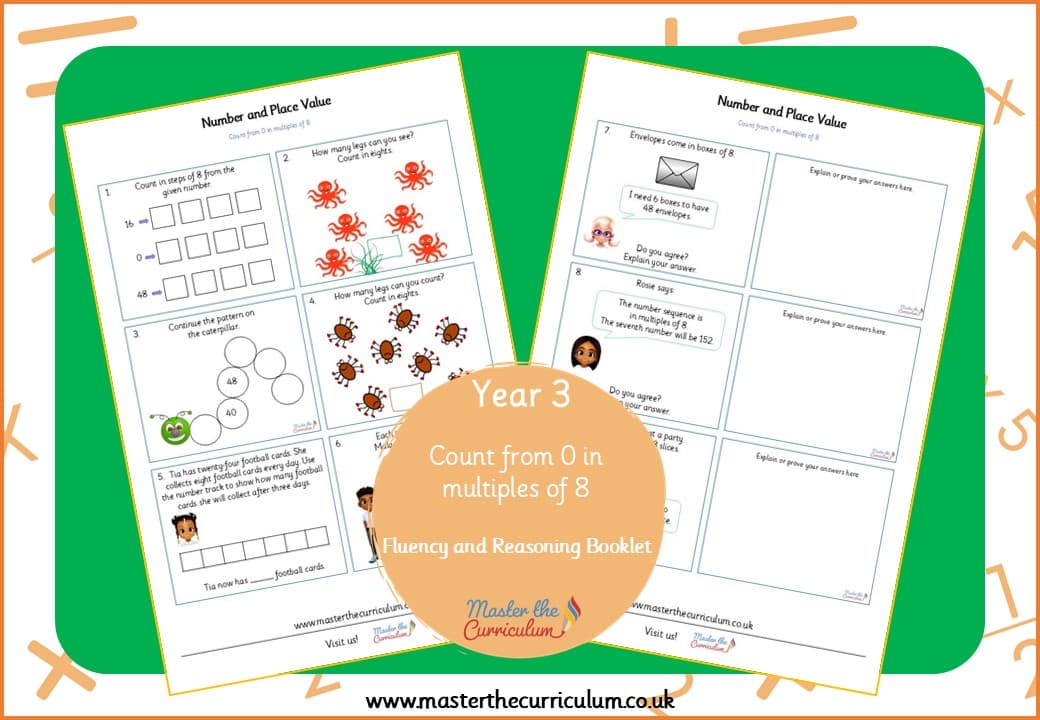
Year 3: Count from 0 in Multiples of 8 – Fluency and Reasoning Booklet

masterthecurriculum.co.uk
Included with membership

Number & Place Value

Y3

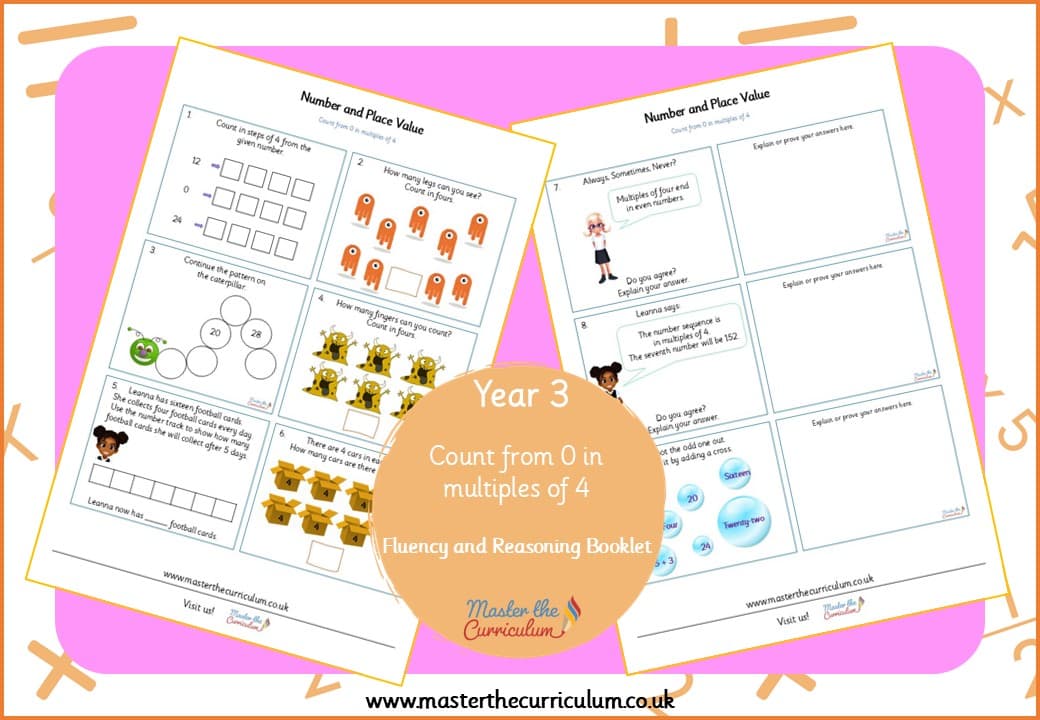
Year 3: Count from 0 in Multiples of 4 – Fluency and Reasoning Booklet

masterthecurriculum.co.uk
Included with membership

Number & Place Value

Y3

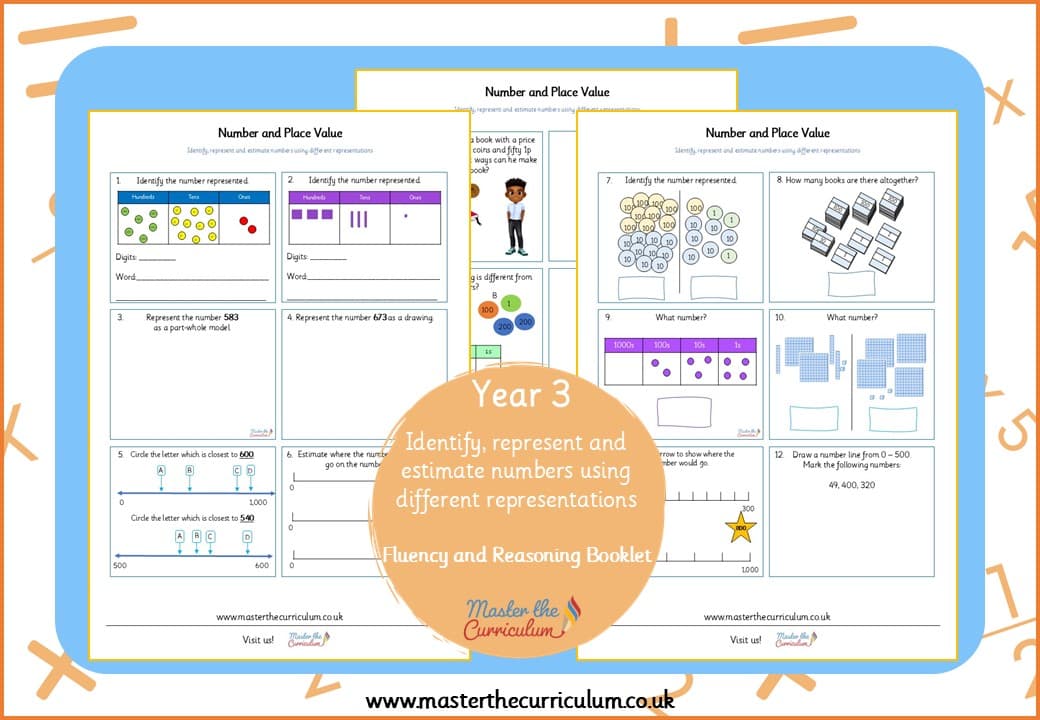
Year 3: Identify, Represent and Estimate Numbers – Fluency and Reasoning Booklet

masterthecurriculum.co.uk
Included with membership
Editable worksheetsWord and PowerPoint, so you can change anythingWhite Rose supportingFollows the small steps you already plan fromDownloadable lesson plansPlanning, slides and worksheets for every stepReasoning and problem solvingBuilt into every step, not sold separately

A free resource every Friday

One email a week, for the year group you actually teach. Unsubscribe in a click.

Year group you teach