Skip to content

Proposed version

Master the Curriculum

Multiplication & Division

Y4

Understand and apply the distributive property of multiplication (1)

masterthecurriculum.co.uk

Preview only. The download is a fully editable file.

See inside

1 page shown before you download

Cover of Understand and apply the distributive property of multiplication (1)1Cover
Cover and first page

The rest of the pack

Planning, teaching slides and all three worksheet levels come with the download.

Year 4Multiplication & Division

Understand and apply the distributive property of multiplication (1)

4.234 reviews

Included with membership

Unlock with membership

Already a member? Sign in and it downloads from this page.

Keep it for later and group it with the rest of the block. No account needed to start.

  • Fully editable Word or PowerPoint file
  • Differentiated three ways
  • Instant download, no watermark

About this resource

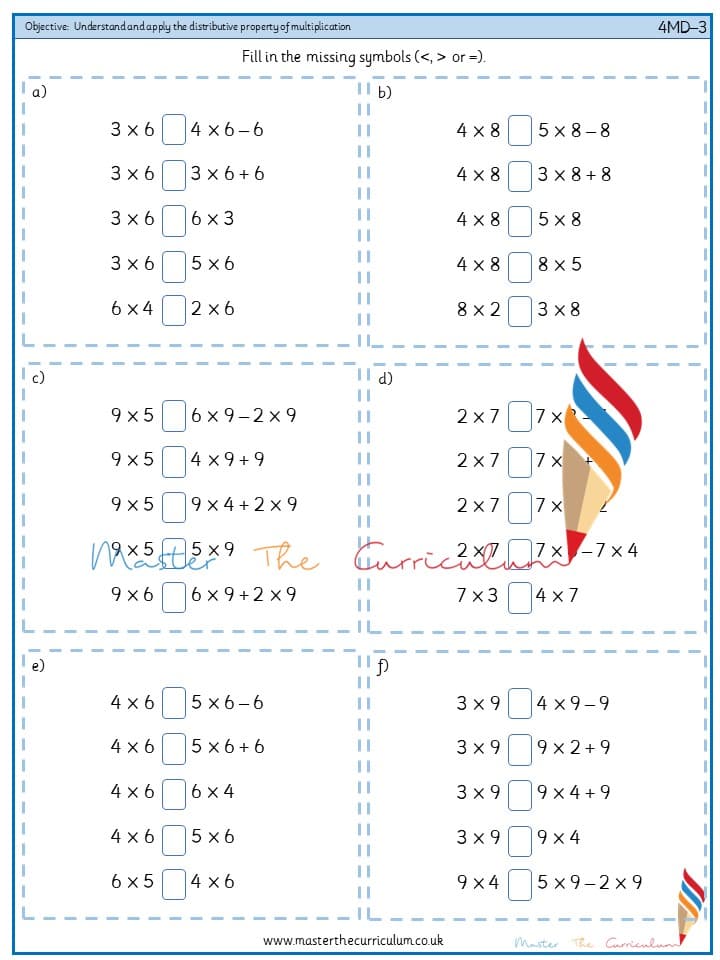
The first place that pupils will have encountered the distributive law is within the multiplication tables themselves. Pupils have seen, for example, that adjacent multiples in the 6 times table have a difference of 6. Number lines and arrays can be used to illustrate this. Pupils should be able to represent such relationships using mixed operation equations, for example: 5 × 6 = 4 × 6 + 6 or 5 × 6 = 4 × 6 + 1 × 6 4 × 6 = 5 × 6 – 6 or 4 × 6 = 5 × 6 – 1 ×6 Pupils should learn that multiplication takes precedence over addition. They should then extend this understanding beyond the multiplication tables, for example, if they are given the equation 20 × 6 = 120, they should be able to determine that 21 × 6 = 126, or vice versa. Pupils also need to be able to apply the distributive property to non-adjacent multiples. The array chart used to show the connection between 4 × 6 and 5 × 6 can be adapted to show the connection between 5 × 6, 3 × 6 and 2 × 6. As for adjacent multiples, pupils should be able to use mixed operation equations to represent the relationships: 5 × 6 = 3 × 6 + 2 × 6 3 × 6 = 5 × 6 – 2 × 6 2 × 6 = 5 × 6 – 3 × 6 Again, pupils should understand that multiplication takes precedence: the multiplications are calculated first, and then the products are added or subtracted. Pupils can use language patterns to support their reasoning. Language focus “5 is equal to 3 plus 2, so 5 times 6 is equal to 3 times 6 plus 2 times 6.”Read more

The first place that pupils will have encountered the distributive law is within the multiplication tables themselves. Pupils have seen, for example, that adjacent multiples in the 6 times table have a difference of 6. Number lines and arrays can be used to illustrate this. Pupils should be able to represent such relationships using mixed operation equations, for example: 5 × 6 = 4 × 6 + 6 or 5 × 6 = 4 × 6 + 1 × 6 4 × 6 = 5 × 6 – 6 or 4 × 6 = 5 × 6 – 1 ×6 Pupils should learn that multiplication takes precedence over addition. They should then extend this understanding beyond the multiplication tables, for example, if they are given the equation 20 × 6 = 120, they should be able to determine that 21 × 6 = 126, or vice versa. Pupils also need to be able to apply the distributive property to non-adjacent multiples. The array chart used to show the connection between 4 × 6 and 5 × 6 can be adapted to show the connection between 5 × 6, 3 × 6 and 2 × 6. As for adjacent multiples, pupils should be able to use mixed operation equations to represent the relationships: 5 × 6 = 3 × 6 + 2 × 6 3 × 6 = 5 × 6 – 2 × 6 2 × 6 = 5 × 6 – 3 × 6 Again, pupils should understand that multiplication takes precedence: the multiplications are calculated first, and then the products are added or subtracted. Pupils can use language patterns to support their reasoning. Language focus “5 is equal to 3 plus 2, so 5 times 6 is equal to 3 times 6 plus 2 times 6.”

Show less

What you get, 2 files

  • PDFActivity
  • PPTXActivity, editable

The standard small step pack, as her own modules ship it. We do not print page counts here, because her catalogue does not publish them and a guessed number is worse than none.

★★★ Differentiated three ways
  • Working towardsScaffolded, with the model or the bar already drawn.
  • Working withinThe expected standard for the year group.
  • Greater depthReasoning and explaining, not just more of the same.

Her own system, with the star count repeated in every worksheet header so a child can be handed the right sheet without a word.

What teachers said after they used it

All reviews →
4.234 verified reviewsWe ask once, seven days after the download, and one tap is enough.
Joanne PicklesYear 3 teacher, Crossflatts Primary, BingleyVerified download, 5 March 2026

Printed it at eight on a Sunday and taught it on the Monday.

No editing, no reformatting, no hunting for the answers. The three levels are on separate pages, which sounds obvious until you have used the sites where they are not.

10 teachers found this helpful
Michael FerrisMaths lead, Cheadle Heath Primary, StockportVerified download, 16 February 2026

Matches our White Rose planning almost week for week.

I stopped adapting things from three different sites and now start here. The odd week does not line up exactly, but the small step it covers is always somewhere in the same block.

8 teachers found this helpful

Aisha KarimSENCO, Newlands Primary Academy, LutonVerified download, 2 February 2026

The editable file is why we renewed.

Being able to change two questions for the child who joined us in January, without rebuilding the whole sheet, is worth the subscription on its own.

12 teachers found this helpful

More multiplication & division for Year 4

Multiplication & Division

Y4

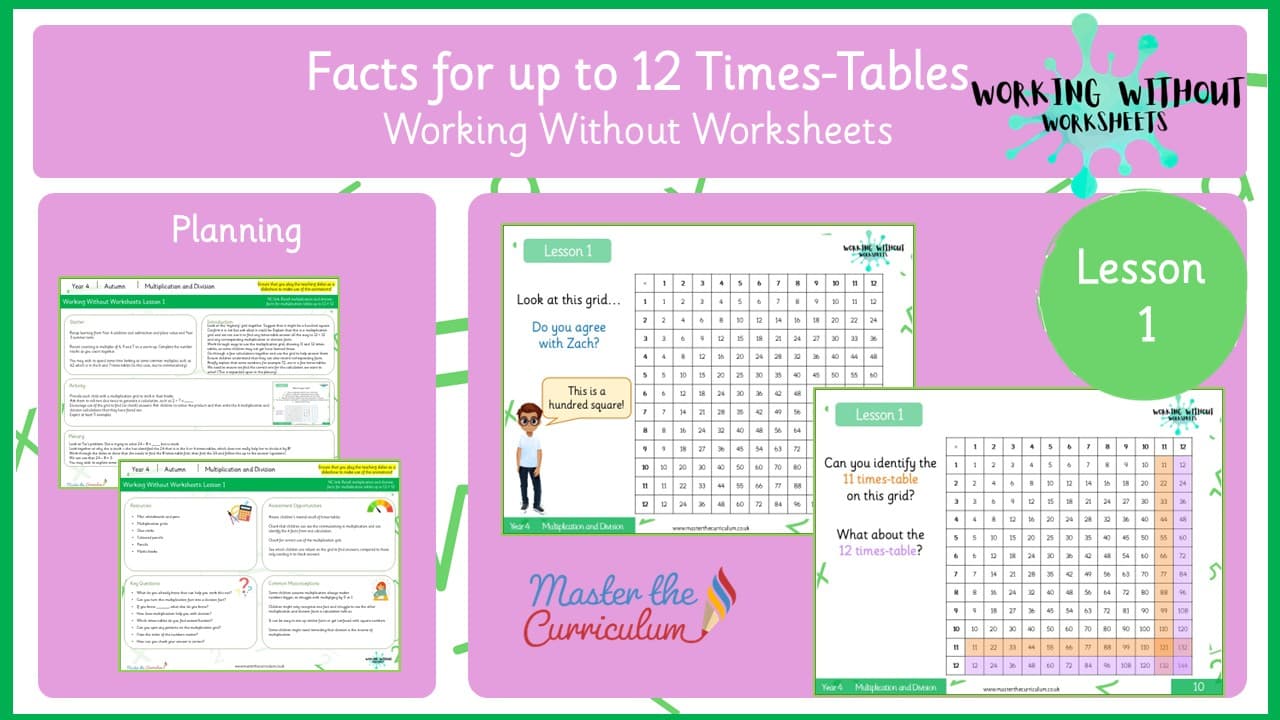
L1 Multiplication and Division Facts for up to 12 Times-Tables

masterthecurriculum.co.uk
4.858 reviews
Included with membership

Multiplication & Division

Y4

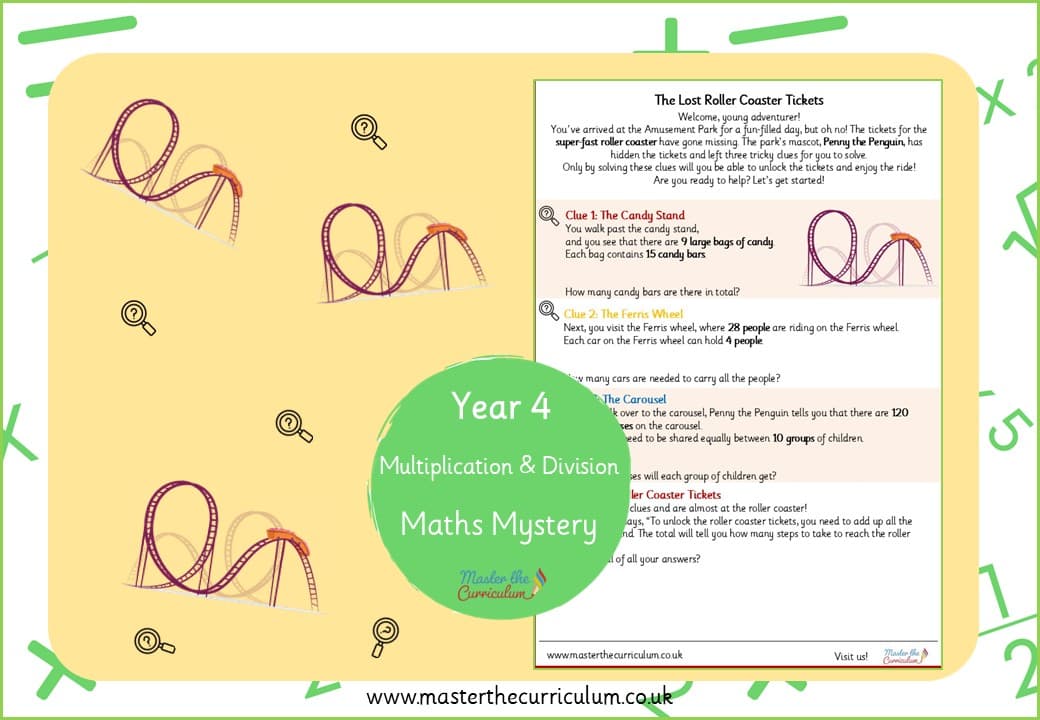
Multiplication and Division – Maths Mystery!

masterthecurriculum.co.uk
4.610 reviews
Included with membership

Multiplication & Division

Y4

Using Factor Pairs

masterthecurriculum.co.uk
4.46 reviews
Included with membership

Multiplication & Division

Y4

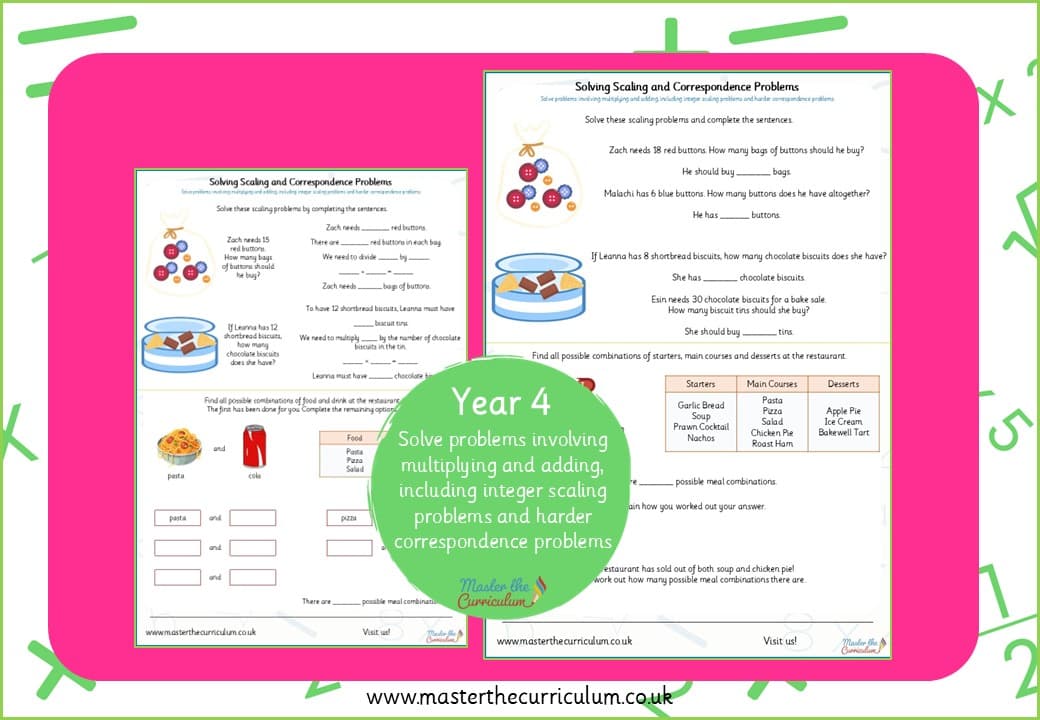
Solve Scaling and Correspondence Problems

masterthecurriculum.co.uk
4.818 reviews
Included with membership
Editable worksheetsWord and PowerPoint, so you can change anythingWhite Rose supportingFollows the small steps you already plan fromDownloadable lesson plansPlanning, slides and worksheets for every stepReasoning and problem solvingBuilt into every step, not sold separately

A free resource every Friday

One email a week, for the year group you actually teach. Unsubscribe in a click.

Year group you teach