
Working Without Worksheets
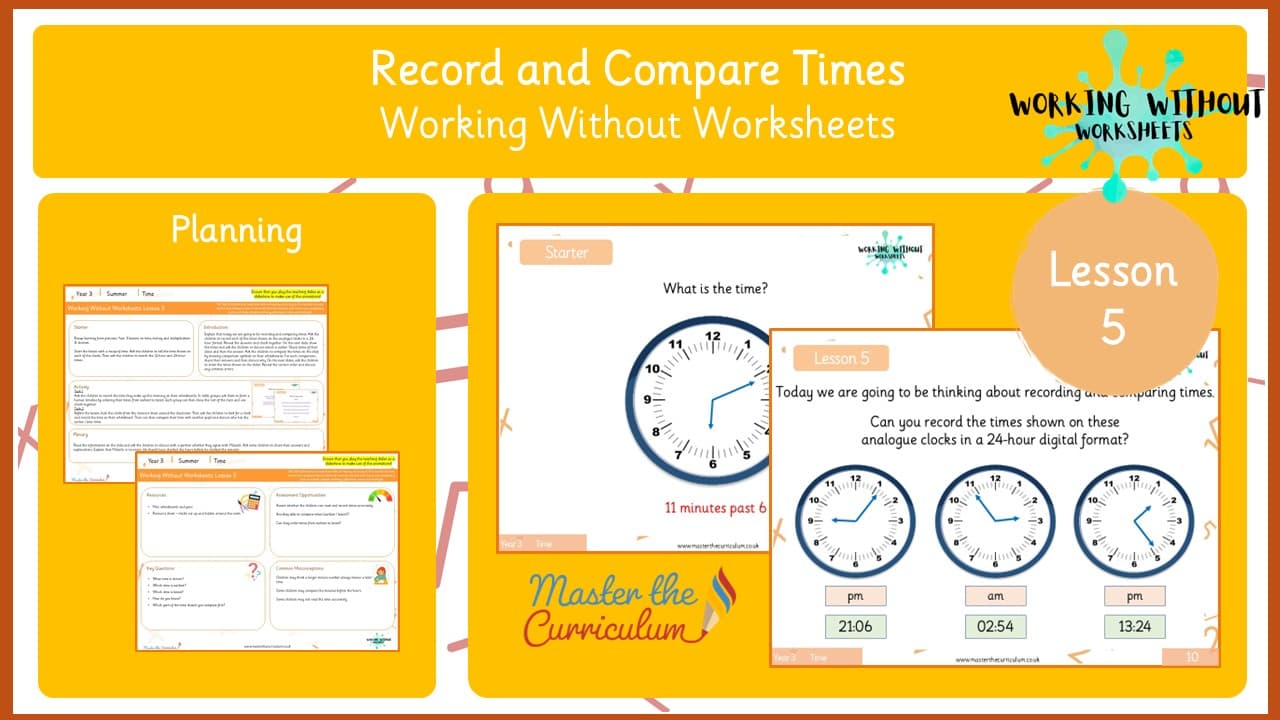
Y3L5 Record and Compare Times
masterthecurriculum.co.uk
Proposed versionTrusted by primary teachers across the UK · New resources every week
Working Without Worksheets
Y3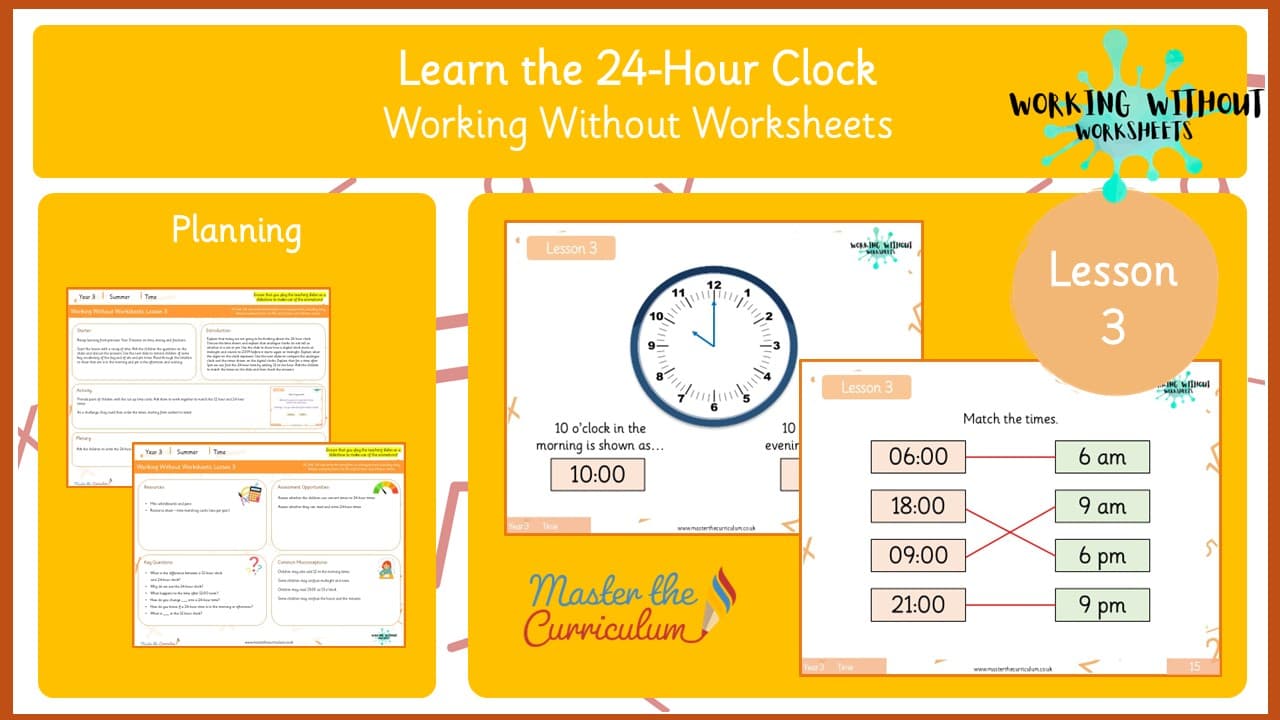
Preview only. The download is a fully editable file.
1 page shown before you download
1CoverThe rest of the pack
Planning, teaching slides and all three worksheet levels come with the download.
An engaging Year 3 lesson plan for teaching the 24-hour clock. Includes interactive teaching slides, practical activities, assessment opportunities, key questions and curriculum-linked guidance to help children understand and use 12-hour and 24-hour time without relying on worksheets.
Included with membership
Unlock with membershipAlready a member? Sign in and it downloads from this page.
Keep it for later and group it with the rest of the block. No account needed to start.
Support Year 3 pupils in understanding and using the 24-hour clock with this engaging, practical lesson plan. Designed to meet the Year 3 National Curriculum for Time, this resource helps children recognise the relationship between 12-hour and 24-hour time through interactive teaching and hands-on learning rather than worksheets. The lesson begins by revising analogue and digital time before introducing the purpose of the 24-hour clock and where it is commonly used, such as timetables, transport and digital devices. Pupils learn how to convert familiar morning and afternoon times into the 24-hour format, identify patterns in the number system and build confidence in reading and writing times using both formats. Through discussion, practical activities and partner work, children compare 12-hour and 24-hour times, explore real-life examples and apply their understanding in meaningful contexts. Opportunities for assessment, questioning and addressing common misconceptions are included throughout to support all learners. This resource includes: A complete Year 3 lesson plan following the Working Without Worksheets approach Interactive teaching slide guidance Practical activities exploring 12-hour and 24-hour time Starter, introduction, main activity and plenary Key questions to develop mathematical understanding Assessment opportunities and common misconceptions Links to the Year 3 National Curriculum for Time Ideal for classroom teachers, supply teachers, ECTs and home educators, this lesson provides a clear and engaging introduction to the 24-hour clock, helping children develop the confidence to read, write and compare times used in everyday life.
Show lessThe standard small step pack, as her own modules ship it. We do not print page counts here, because her catalogue does not publish them and a guessed number is worse than none.
Her own system, with the star count repeated in every worksheet header so a child can be handed the right sheet without a word.
Working Without Worksheets, Year 310 numbered lessons
Working Without Worksheets
Y3Working Without Worksheets
Y3
Working Without Worksheets
Y3
Working Without Worksheets
Y3
Working Without Worksheets
Y3
One email a week, for the year group you actually teach. Unsubscribe in a click.