Skip to content

Proposed version

Master the Curriculum

Addition & Subtraction

Y3

L5 Solve Addition and Subtraction Missing Number Problems

masterthecurriculum.co.uk

Preview only. The download is a fully editable file.

See inside

1 page shown before you download

Cover of L5 Solve Addition and Subtraction Missing Number Problems1Cover
Cover and first page

The rest of the pack

Planning, teaching slides and all three worksheet levels come with the download.

Year 3Addition & Subtraction

L5 Solve Addition and Subtraction Missing Number Problems

A Year 3 maths lesson on solving missing number problems using inverse operations . Pupils use part–whole models, reasoning strategies and a classroom problem hunt to find unknown values in addition and subtraction calculations.

Included with membership

Unlock with membership

Already a member? Sign in and it downloads from this page.

Keep it for later and group it with the rest of the block. No account needed to start.

  • Fully editable Word or PowerPoint file
  • Differentiated three ways
  • Instant download, no watermark

About this resource

This Year 3 maths lesson on missing number problems and inverse operations helps pupils develop confidence in solving addition and subtraction equations with unknown values. By combining visual models, mental maths strategies and reasoning tasks, children learn how to use the inverse relationship between addition and subtraction to find missing numbers and check their answers. The lesson begins with a starter activity revisiting previous Year 3 learning on addition, subtraction, place value and fractions . Pupils recall how inverse operations can be used to solve missing number problems and review examples from a previous lesson. Together, the class discusses how the order of numbers and the operation change when using the inverse , and considers whether using the inverse is always the most helpful strategy. During the main teaching input , pupils explore a clear step-by-step approach to solving missing number problems. The teacher models how to: Verbalise the problem to understand what is happening mathematically Represent the numbers using a part–whole model to visualise the relationship between the values Use the inverse calculation to determine the missing number Pupils are also reminded of previously learned mental maths strategies that can simplify calculations, such as adjusting numbers to make them easier to work with. For example, solving 782 − 352 by subtracting 350 first before adjusting the remaining amount. Children then practise solving several missing number calculations on whiteboards , using both part–whole models and inverse operations to support their reasoning. The lesson also includes a word problem , where pupils must identify the relevant information before deciding which calculation is required. In the independent activity , pupils take part in a fun and engaging missing number hunt around the classroom . Laminated problem cards are placed around the room and children record each problem in their books. For every calculation, pupils are expecRead more

This Year 3 maths lesson on missing number problems and inverse operations helps pupils develop confidence in solving addition and subtraction equations with unknown values. By combining visual models, mental maths strategies and reasoning tasks, children learn how to use the inverse relationship between addition and subtraction to find missing numbers and check their answers. The lesson begins with a starter activity revisiting previous Year 3 learning on addition, subtraction, place value and fractions . Pupils recall how inverse operations can be used to solve missing number problems and review examples from a previous lesson. Together, the class discusses how the order of numbers and the operation change when using the inverse , and considers whether using the inverse is always the most helpful strategy. During the main teaching input , pupils explore a clear step-by-step approach to solving missing number problems. The teacher models how to: Verbalise the problem to understand what is happening mathematically Represent the numbers using a part–whole model to visualise the relationship between the values Use the inverse calculation to determine the missing number Pupils are also reminded of previously learned mental maths strategies that can simplify calculations, such as adjusting numbers to make them easier to work with. For example, solving 782 − 352 by subtracting 350 first before adjusting the remaining amount. Children then practise solving several missing number calculations on whiteboards , using both part–whole models and inverse operations to support their reasoning. The lesson also includes a word problem , where pupils must identify the relevant information before deciding which calculation is required. In the independent activity , pupils take part in a fun and engaging missing number hunt around the classroom . Laminated problem cards are placed around the room and children record each problem in their books. For every calculation, pupils are expec

Show less

What you get, 6 files

  • PDFPlanning
  • PPTXPlanning, editable
  • PDFTeaching slides
  • PPTXTeaching slides, editable
  • PDFWorksheets, all three levels
  • PPTXWorksheets, editable

The standard small step pack, as her own modules ship it. We do not print page counts here, because her catalogue does not publish them and a guessed number is worse than none.

★★★ Differentiated three ways
  • Working towardsScaffolded, with the model or the bar already drawn.
  • Working withinThe expected standard for the year group.
  • Greater depthReasoning and explaining, not just more of the same.

Her own system, with the star count repeated in every worksheet header so a child can be handed the right sheet without a word.

The rest of this block

Addition & Subtraction, Year 325 numbered lessons

  1. Lesson 3Year 3: Addition and Subtraction: Lesson 3 – Add 3-digit and 1-digit Numbers
  2. Lesson 4Year 3: Addition and Subtraction: Lesson 4 – Subtract 1-digit from 3-digits
  3. Lesson 5 · you are hereSolve Addition and Subtraction Missing Number Problems
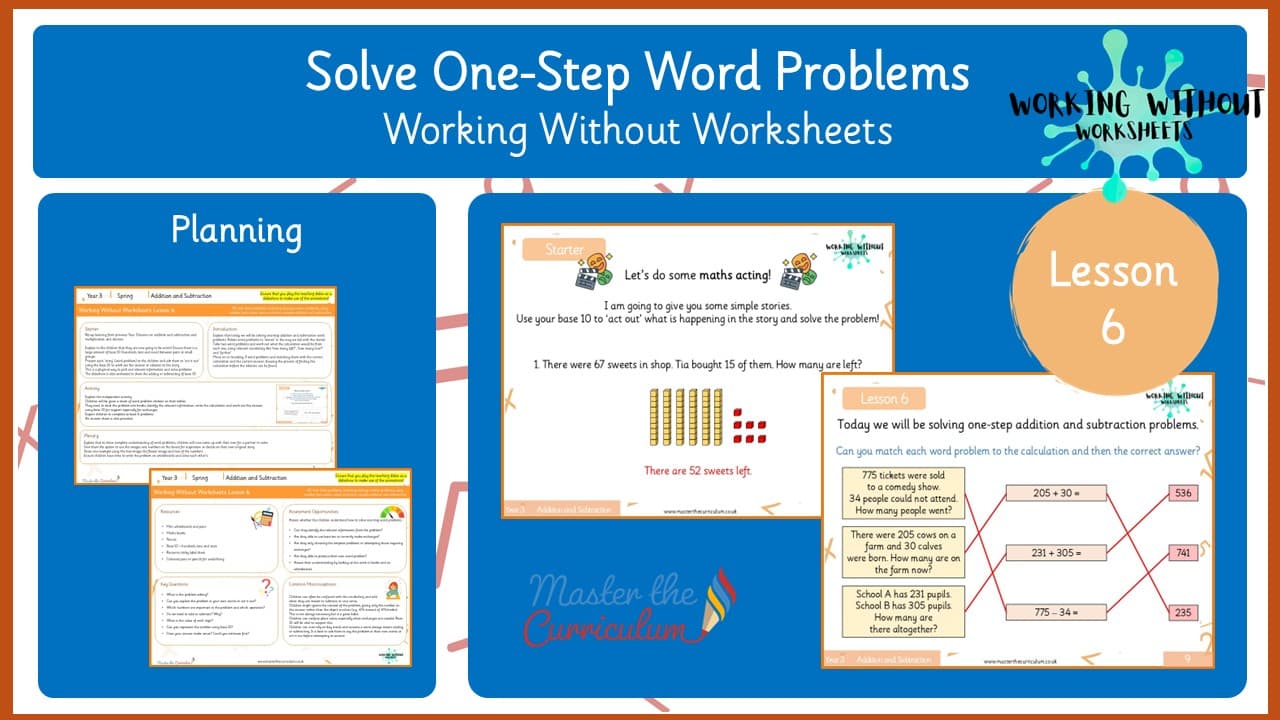
  4. Lesson 6Solve One-Step Addition and Subtraction Word Problems
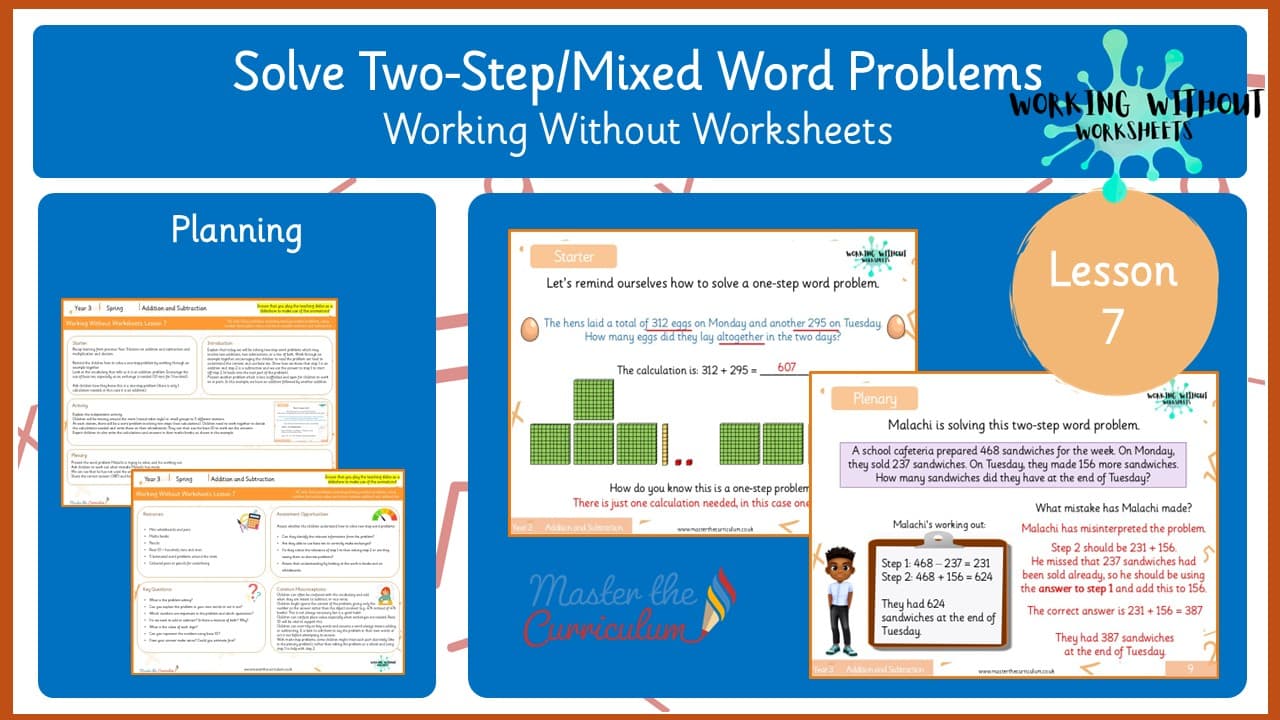
  5. Lesson 7Solve Two-Step and Mixed Addition and Subtraction Word Problems

More addition & subtraction for Year 3

Addition & Subtraction

Y3

L7 Solve Two-Step and Mixed Addition and Subtraction Word Problems

masterthecurriculum.co.uk
4.827 reviews
Included with membership

Addition & Subtraction

Y3

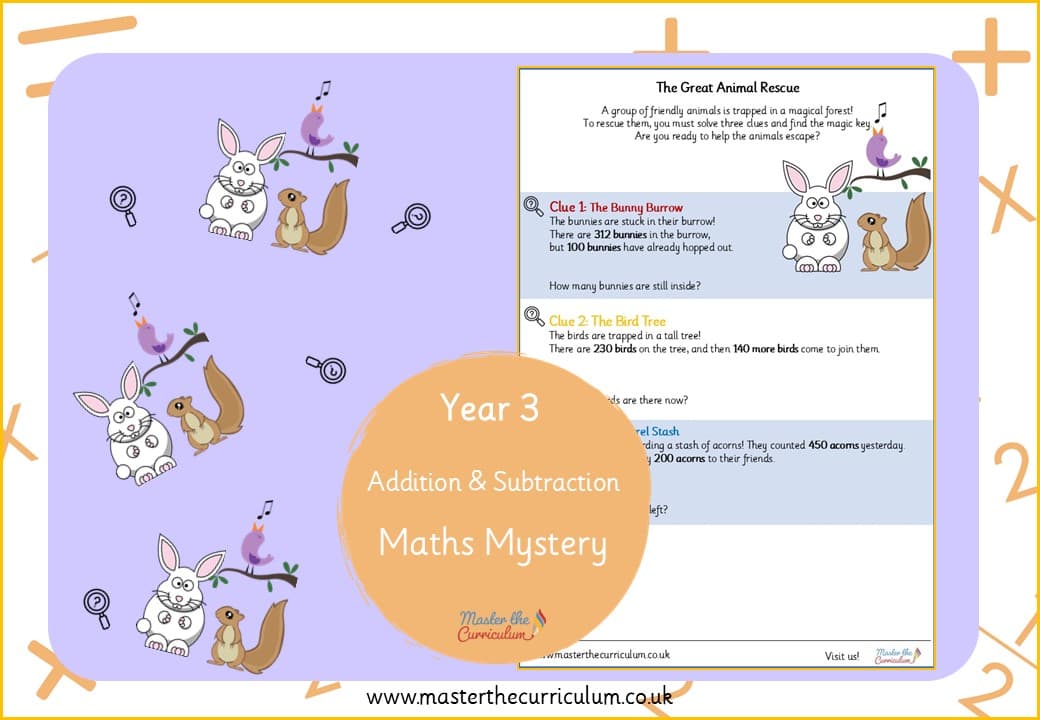
Addition and Subtraction – Maths Mystery!

masterthecurriculum.co.uk
4.826 reviews
Included with membership

Addition & Subtraction

Y3

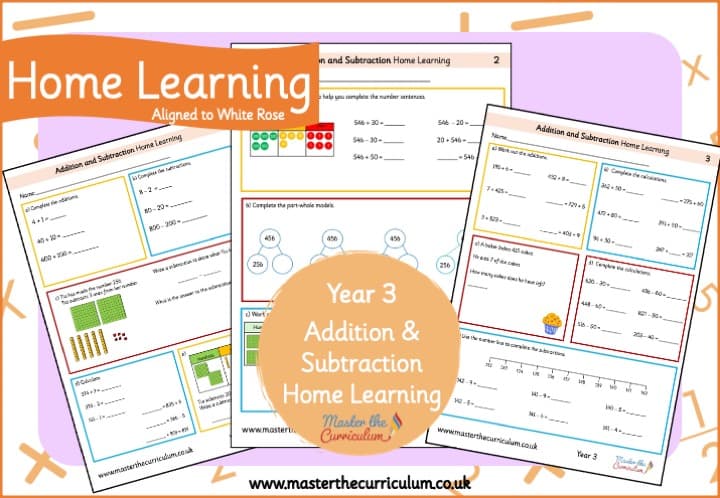
Year 3: Addition & Subtraction – solve addition and subtraction fluency and reasoning booklet

masterthecurriculum.co.uk
Included with membership
Editable worksheetsWord and PowerPoint, so you can change anythingWhite Rose supportingFollows the small steps you already plan fromDownloadable lesson plansPlanning, slides and worksheets for every stepReasoning and problem solvingBuilt into every step, not sold separately

A free resource every Friday

One email a week, for the year group you actually teach. Unsubscribe in a click.

Year group you teach