Skip to content

Proposed version

Master the Curriculum

Addition & Subtraction

Y6

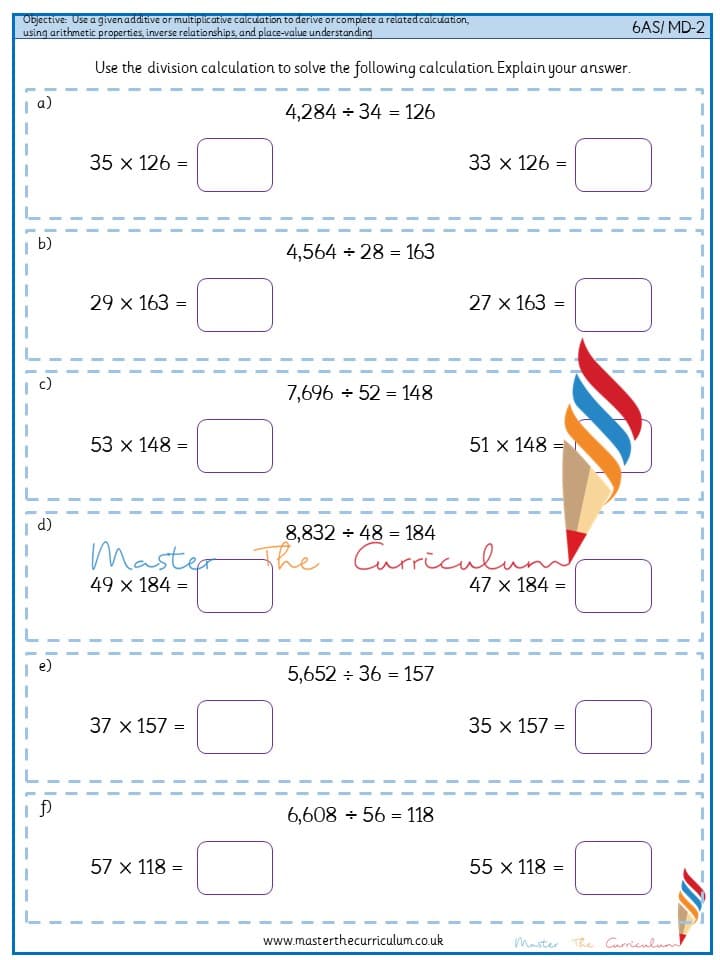
Use a given additive or multiplicative calculation to derive or complete a related calculation, using arithmetic properties, inverse relationships, and place-value understanding (5)

masterthecurriculum.co.uk

Preview only. The download is a fully editable file.

See inside

1 page shown before you download

Cover of Use a given additive or multiplicative calculation to derive or complete a related calculation, using arithmetic properties, inverse relationships, and place-value understanding (5)1Cover
Cover and first page

The rest of the pack

Planning, teaching slides and all three worksheet levels come with the download.

Year 6Addition & Subtraction

Use a given additive or multiplicative calculation to derive or complete a related calculation, using arithmetic properties, inverse relationships, and place-value understanding (5)

4.051 reviews

Included with membership

Unlock with membership

Already a member? Sign in and it downloads from this page.

Keep it for later and group it with the rest of the block. No account needed to start.

  • Fully editable Word or PowerPoint file
  • Differentiated three ways
  • Instant download, no watermark

About this resource

In previous year groups in key stage 2 pupils have learnt about and used the commutative and associative properties of addition (3AS–3), and the commutative, associative and distributive properties of multiplication (4MD–2 and 4MD–3). Pupils have also implicitly used the compensation property of addition, for example, when partitioning two-digit numbers in different ways in year 2: 70 + 2 = 72 60 + 12 = 72. In year 6, pupils should learn the compensation property of addition. Language focus “If one addend is increased and the other is decreased by the same amount, the sum stays the same.” Pupils should be able to use the compensation property of addition to complete equations such as 25 + 35 = 27.5 +?, and to help them solve calculations such as 25.7 + 32.5. Similarly, pupils may have implicitly used the compensation property of multiplication, for example, when recognising connections between multiplication table facts: 5 × 8 = 10 × 4 In year 6, pupils should learn the compensation property of multiplication. Language focus “If I multiply one factor by a number, I must divide the other factor by the same number for the product to stay the same.” Pupils should be able to use the compensation property of multiplication to complete equations such as 0.3 × 320 = 3 × ?, and to help them solve calculations such as 0.3 × 320. Pupils have extensive experience about the effect on the product of scaling one factor from 3NF–3, 4F–3 and 5NF–2, where they learnt to scale known number facts by 10, 100, one-tenth and one-hundredth. Now they can generalise. Language focus “If I multiply one factor by a number, and keep the other factor the same, I must multiply the product by the same number.” Pupils should practise combining their knowledge of arithmetic properties and relationships to solve problems such as the examples here and in the Example assessment questions below. Pupils should learn to write a series of written equations to justify their solutions. Being able to work fluRead more

In previous year groups in key stage 2 pupils have learnt about and used the commutative and associative properties of addition (3AS–3), and the commutative, associative and distributive properties of multiplication (4MD–2 and 4MD–3). Pupils have also implicitly used the compensation property of addition, for example, when partitioning two-digit numbers in different ways in year 2: 70 + 2 = 72 60 + 12 = 72. In year 6, pupils should learn the compensation property of addition. Language focus “If one addend is increased and the other is decreased by the same amount, the sum stays the same.” Pupils should be able to use the compensation property of addition to complete equations such as 25 + 35 = 27.5 +?, and to help them solve calculations such as 25.7 + 32.5. Similarly, pupils may have implicitly used the compensation property of multiplication, for example, when recognising connections between multiplication table facts: 5 × 8 = 10 × 4 In year 6, pupils should learn the compensation property of multiplication. Language focus “If I multiply one factor by a number, I must divide the other factor by the same number for the product to stay the same.” Pupils should be able to use the compensation property of multiplication to complete equations such as 0.3 × 320 = 3 × ?, and to help them solve calculations such as 0.3 × 320. Pupils have extensive experience about the effect on the product of scaling one factor from 3NF–3, 4F–3 and 5NF–2, where they learnt to scale known number facts by 10, 100, one-tenth and one-hundredth. Now they can generalise. Language focus “If I multiply one factor by a number, and keep the other factor the same, I must multiply the product by the same number.” Pupils should practise combining their knowledge of arithmetic properties and relationships to solve problems such as the examples here and in the Example assessment questions below. Pupils should learn to write a series of written equations to justify their solutions. Being able to work flu

Show less

What you get, 2 files

  • PDFActivity
  • PPTXActivity, editable

The standard small step pack, as her own modules ship it. We do not print page counts here, because her catalogue does not publish them and a guessed number is worse than none.

★★★ Differentiated three ways
  • Working towardsScaffolded, with the model or the bar already drawn.
  • Working withinThe expected standard for the year group.
  • Greater depthReasoning and explaining, not just more of the same.

Her own system, with the star count repeated in every worksheet header so a child can be handed the right sheet without a word.

What teachers said after they used it

All reviews →
4.051 verified reviewsWe ask once, seven days after the download, and one tap is enough.
Aisha KarimSENCO, Newlands Primary Academy, LutonVerified download, 2 February 2026

The editable file is why we renewed.

Being able to change two questions for the child who joined us in January, without rebuilding the whole sheet, is worth the subscription on its own.

12 teachers found this helpful

Steven LoughYear 2 teacher, Abbeyfields First School, MorpethVerified download, 23 January 2026

Good value, and the answers are actually on it.

Small thing, but half the free sheets online expect you to work the answers out yourself. My TA can run a group on this without a briefing first.

5 teachers found this helpful

Beth NightingaleYear 1 teacher, Poplar Farm School, GranthamVerified download, 13 January 2026

Fine, though the font is small for my class.

The maths is right and the sequence is sensible. Several of my children needed it enlarged to A3, which is easy enough but worth knowing before you print thirty.

4 teachers found this helpful

More addition & subtraction for Year 6

Addition & Subtraction

Y6

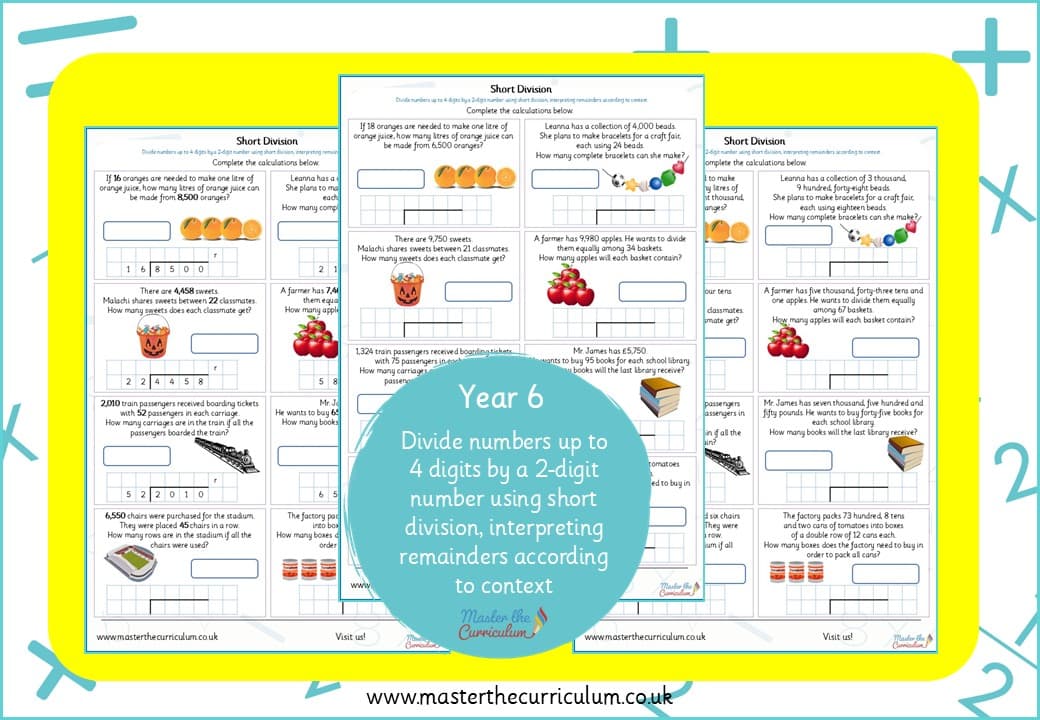
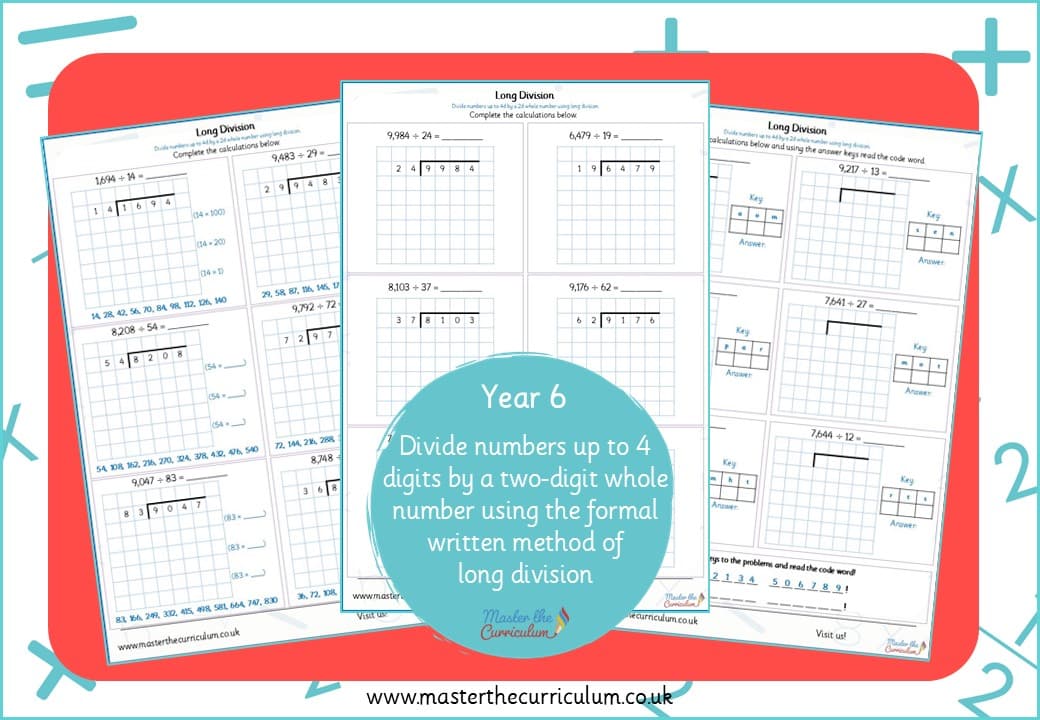
Divide up to 4-Digit Numbers by 2-Digit Whole Numbers Using Long Division – Alternative Method

masterthecurriculum.co.uk
Included with membership

Addition & Subtraction

Y6

Short Division with Remainders

masterthecurriculum.co.uk
4.67 reviews
Included with membership

Addition & Subtraction

Y6

Interpret Remainders in Context

masterthecurriculum.co.uk
4.855 reviews
Included with membership

Addition & Subtraction

Y6

Divide up to 4-Digit Numbers by 2-Digit Whole Numbers Using Long Division

masterthecurriculum.co.uk
4.922 reviews
Included with membership

Addition & Subtraction

Y6

Solve Addition and Subtraction Multi-Step Problems in Context

masterthecurriculum.co.uk
Included with membership
Editable worksheetsWord and PowerPoint, so you can change anythingWhite Rose supportingFollows the small steps you already plan fromDownloadable lesson plansPlanning, slides and worksheets for every stepReasoning and problem solvingBuilt into every step, not sold separately

A free resource every Friday

One email a week, for the year group you actually teach. Unsubscribe in a click.

Year group you teach