
Addition & Subtraction
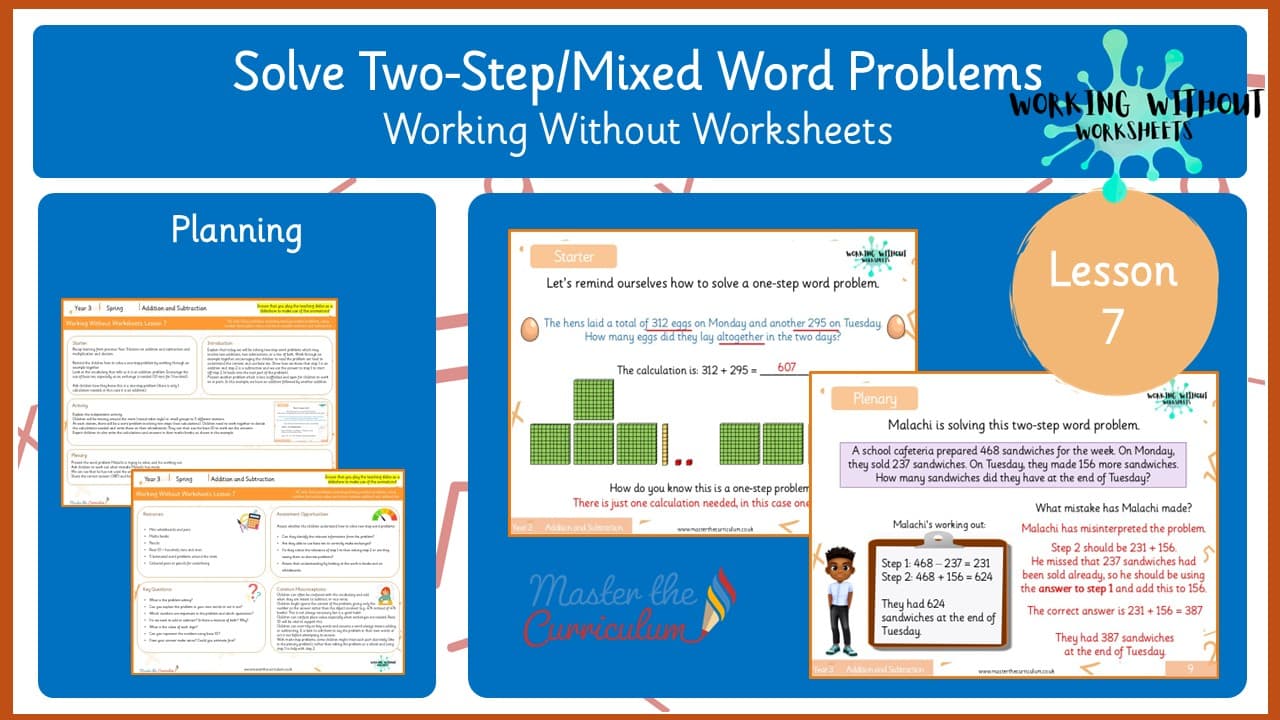
Y3L7 Solve Two-Step and Mixed Addition and Subtraction Word Problems
masterthecurriculum.co.uk
4.827 reviews
Included with membershipProposed versionTrusted by primary teachers across the UK · New resources every week
Addition & Subtraction
Y3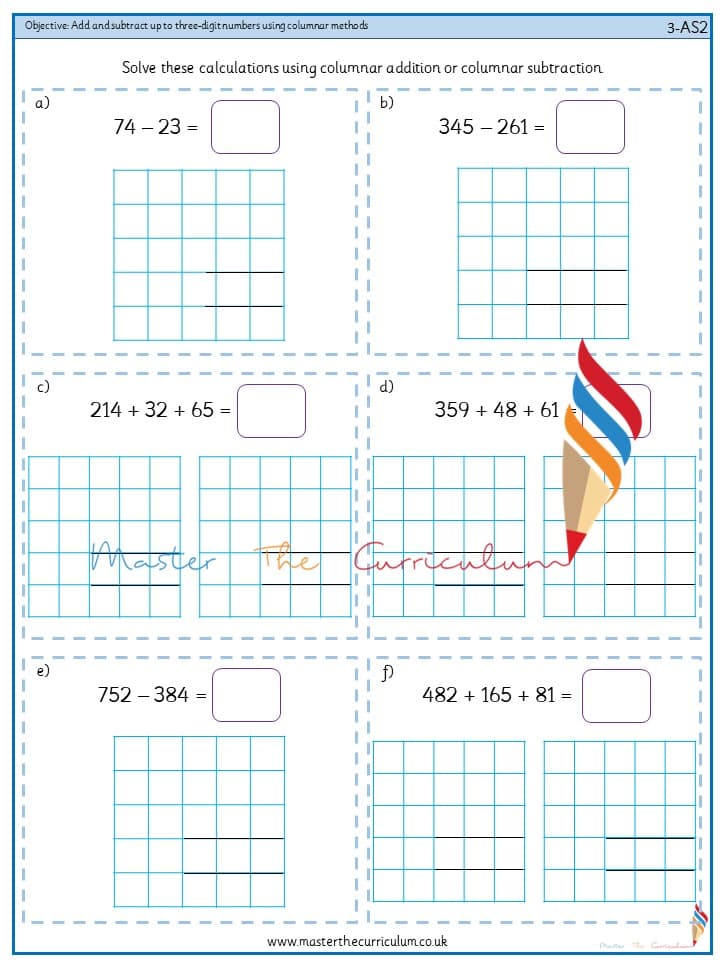
Preview only. The download is a fully editable file.
1 page shown before you download
1CoverThe rest of the pack
Planning, teaching slides and all three worksheet levels come with the download.
Included with membership
Unlock with membershipAlready a member? Sign in and it downloads from this page.
Keep it for later and group it with the rest of the block. No account needed to start.
Pupils must learn to add and subtract using the formal written methods of columnar addition and columnar subtraction. Pupils should master columnar addition, including calculations involving regrouping (some columns sum to 10 or more), before learning columnar subtraction. However, guidance here is combined due to the similarities between the two algorithms. Beginning with calculations that do not involve regrouping (no columns sum to 10 or more) or exchange (no columns have a minuend smaller than the subtrahend), pupils should: learn to lay out columnar calculations with like digits correctly aligned. learn to work from right to left, adding or subtracting the least significant digits first. Teachers should initially use place-value equipment, such as Dienes, to model the algorithms and help pupils make connections to what they already know about addition and subtraction. Pupils must also learn to carry out columnar addition calculations that involve regrouping, and columnar subtraction calculations that involve exchange. Regrouping and exchange build on pupils’ understanding that 10 ones is equivalent to 1 ten, and that 10 tens is equivalent to 1 hundred. Dienes can be used to model the calculations, and to draw attention to the regrouping/exchange. Dienes (or any other place-value apparatus) should be used, only initially, to support pupils understanding of the structure of the algorithms, and should not be used as a tool for finding the answer. Once pupils understand the algorithms, they should use known facts to perform the calculation in each column (3NF–1). For calculations with more than 2 addends, pupils should add the digits within a column in the most efficient order. Pupils should use unitising language to describe within-column calculations. Language focus “3 ones plus 5 ones is equal to 8 ones.”“4 tens plus 2 tens is equal to 6 tens.” “5 ones minus 3 ones is equal to 2 ones.”“6 tens minus 2 tens is equal to 4 tens” Pupils must learn that, although colu
Show lessThe standard small step pack, as her own modules ship it. We do not print page counts here, because her catalogue does not publish them and a guessed number is worse than none.
Her own system, with the star count repeated in every worksheet header so a child can be handed the right sheet without a word.
Addition & Subtraction
Y3Addition & Subtraction
Y3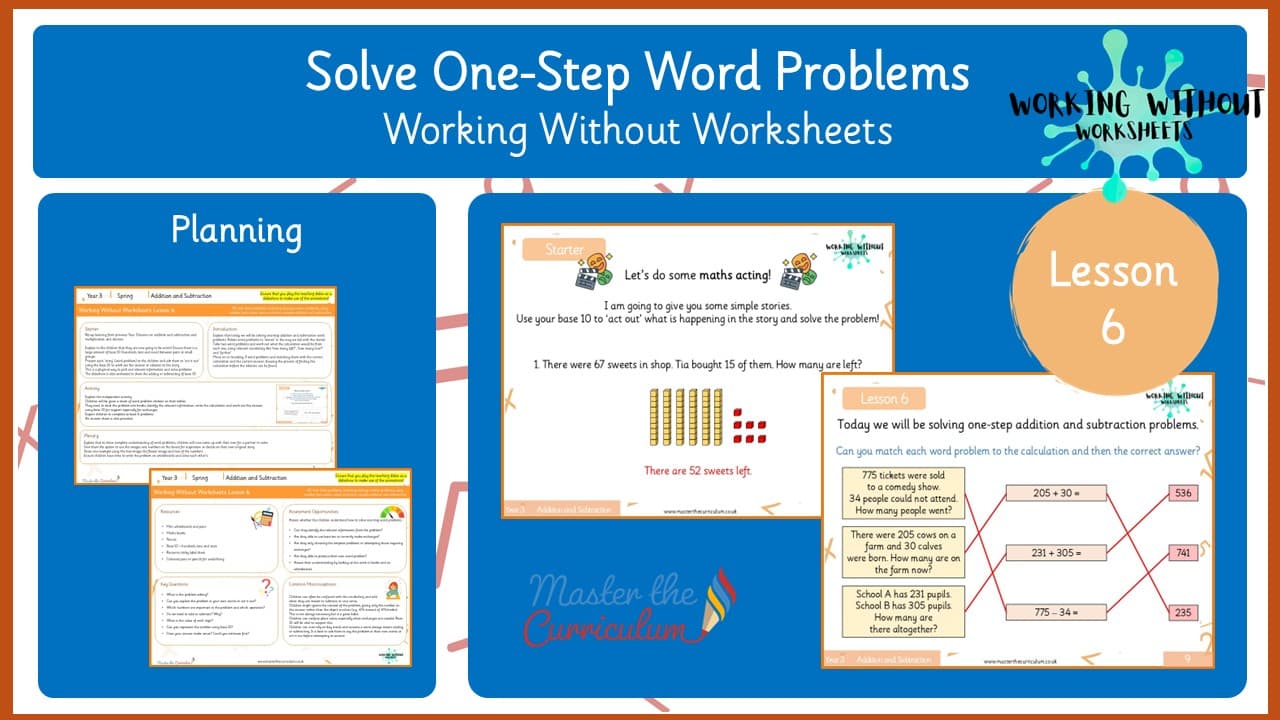
Addition & Subtraction
Y3
Addition & Subtraction
Y3
Addition & Subtraction
Y3
One email a week, for the year group you actually teach. Unsubscribe in a click.