
Addition & Subtraction
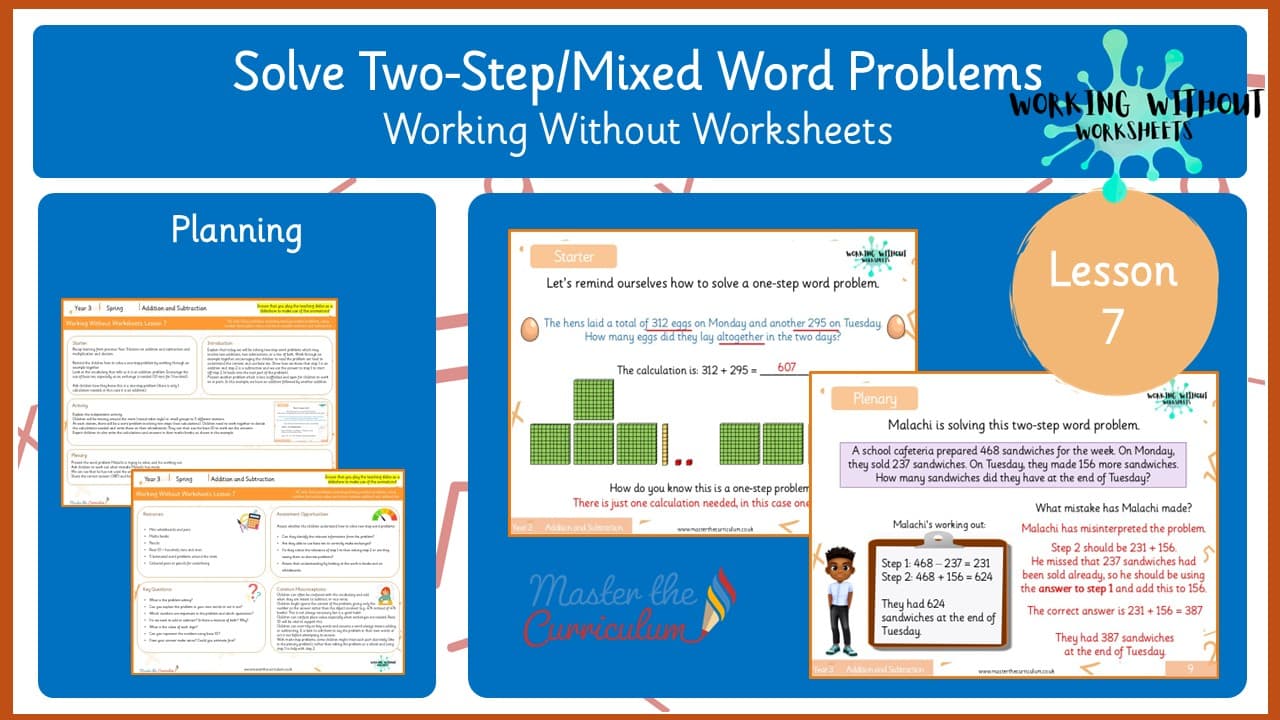
Y3L7 Solve Two-Step and Mixed Addition and Subtraction Word Problems
masterthecurriculum.co.uk
4.827 reviews
Included with membershipProposed versionTrusted by primary teachers across the UK · New resources every week
Addition & Subtraction
Y3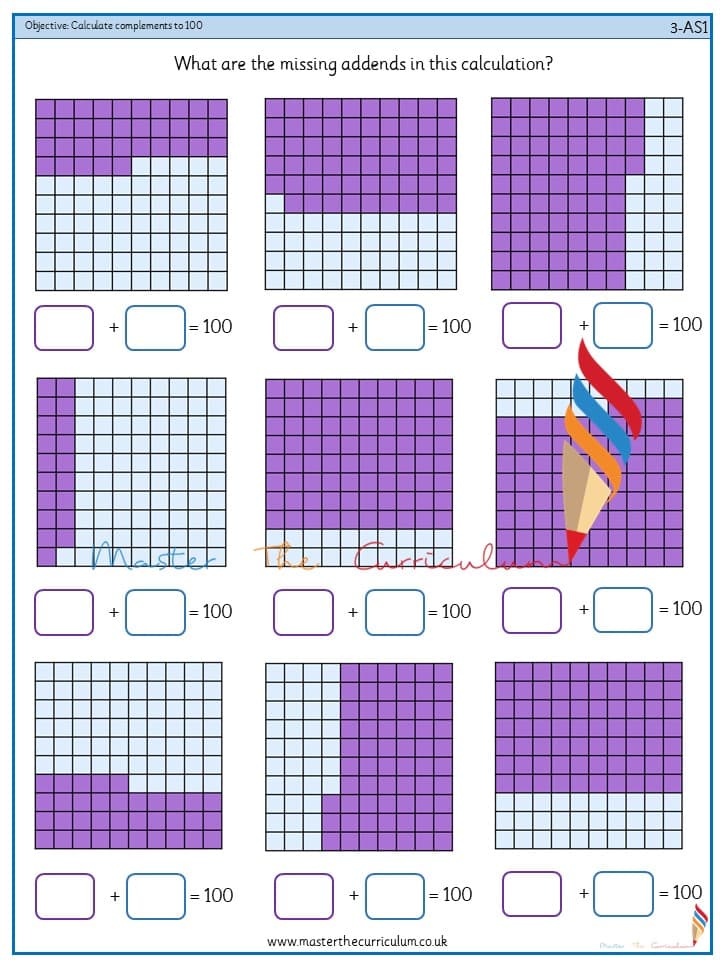
Preview only. The download is a fully editable file.
1 page shown before you download
1CoverThe rest of the pack
Planning, teaching slides and all three worksheet levels come with the download.
Included with membership
Unlock with membershipAlready a member? Sign in and it downloads from this page.
Keep it for later and group it with the rest of the block. No account needed to start.
Calculating complements to 100 is an important skill, because it is a prerequisite for calculating how much change is due when paying for an item. When pupils calculate complements (the amount needed to complete a total), a common error is to end up with a total that is too large: When calculating complements to 100, pupils typically make an extra ‘unit’ of 10, making 110 instead of 100. When finding change from a whole number of pounds, pupils typically make an extra £1, for example, they incorrectly calculate the change due from £5 for a cost of £3.40 as £2.60. It is important for pupils to spend time specifically learning about calculating complements, including the risk of creating ‘extra units’. This should begin in year 3, with calculating complements to 100. Pupils should compare correct calculations with the corresponding common incorrect calculations for complements to 100. They should be able to discuss the pairs of calculations and understand the source of the error in the incorrect calculations. A shaded 100 grid can be used to show why there are only 9 full tens in the correct complements to 100. The 10th ten is composed of the ones digits. Once pupils understand why given complements to 100 are correct or not, they should learn to work in steps to calculate complements themselves: 1. First make 10 ones. 2. Then work out the number of additional tens needed. Pupils must understand that the tens digits should bond to 9, not to 10. 3. Check that the 2 numbers sum to 100. Language focus “First we make 10 ones. The ones digits add up to 1 ten, so we need 9 more tens.”
Show lessThe standard small step pack, as her own modules ship it. We do not print page counts here, because her catalogue does not publish them and a guessed number is worse than none.
Her own system, with the star count repeated in every worksheet header so a child can be handed the right sheet without a word.
Addition & Subtraction
Y3Addition & Subtraction
Y3
Addition & Subtraction
Y3
Addition & Subtraction
Y3
Addition & Subtraction
Y3
One email a week, for the year group you actually teach. Unsubscribe in a click.