
Addition & Subtraction
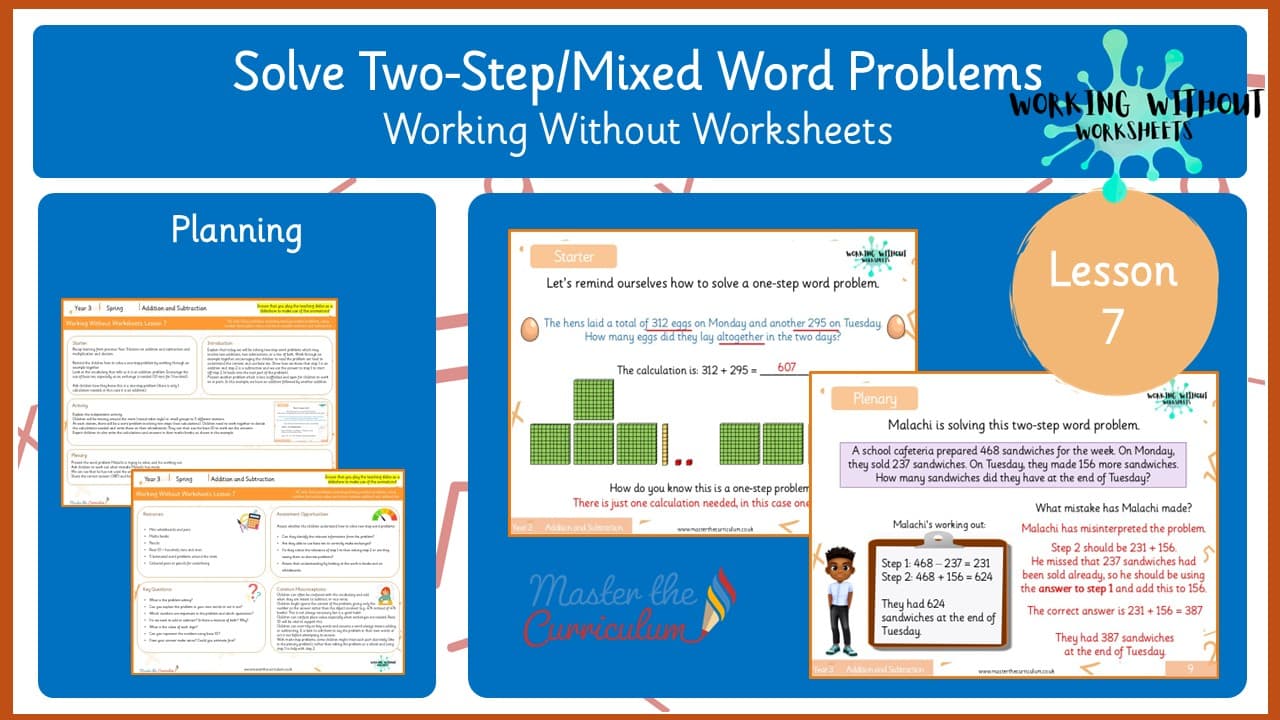
Y3L7 Solve Two-Step and Mixed Addition and Subtraction Word Problems
masterthecurriculum.co.uk
4.827 reviews
Included with membershipProposed versionTrusted by primary teachers across the UK · New resources every week
Addition & Subtraction
Y3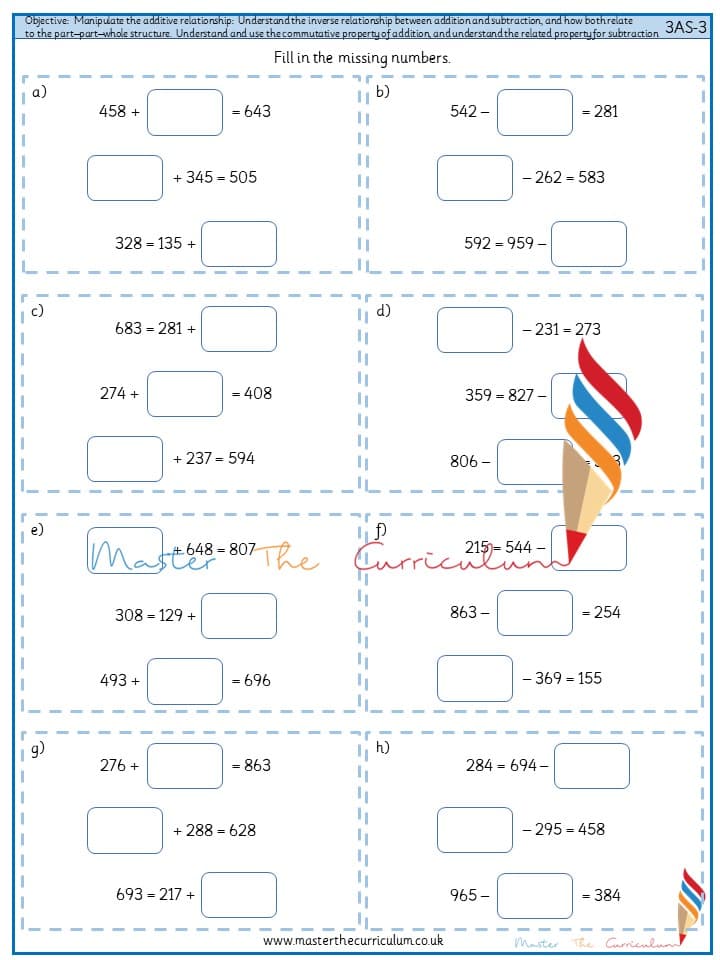
Preview only. The download is a fully editable file.
1 page shown before you download
1CoverThe rest of the pack
Planning, teaching slides and all three worksheet levels come with the download.
Included with membership
Unlock with membershipAlready a member? Sign in and it downloads from this page.
Keep it for later and group it with the rest of the block. No account needed to start.
Pupils will begin year 3 with an understanding of some of the individual concepts covered in this criterion, and will already be familiar with using partitioning diagrams and bar models. However, pupils need to leave year 3 with a coherent understanding of the additive relationship, and how addition and subtraction equations relate to the various additive structures. Pupils must understand that the simplest addition and subtraction equations describe the relationship between 3 numbers, where one is a sum of the other two. They should understand that both addition and subtraction equations can be used to describe the same additive relationship. They should practise writing the full set of 8 equations that are represented by a given partitioning diagram or bar model. Pupils should learn and use the correct names for the terms in addition and subtraction equations. addend + addend = sum minuend – subtrahend = difference. Pupils understanding should go beyond the fact that addition and subtraction are inverse operations. They need understand how the terms in addition and subtraction equations are related to each other, and to the parts and whole within an additive relationship, and use this understanding to manipulate equations. With experience of the commutative property of addition, pupils can now learn that, because of the relationship between addition and subtraction, the commutative property has a related property for subtraction. Language focus “If we swap the values of the subtrahend and difference, the minuend remains the same” Both of the following equations are therefore correct: 37 – 25 = 12 37 – 12 = 25. Pupils should use their understanding of the additive relationship and how it is related to parts and a whole, the inverse relationship between addition and subtraction, and the commutative property, to manipulate equations. They must recognise that if 2 of the 3 numbers in a given additive relationship are known, the unknown number can always be determined:
Show lessThe standard small step pack, as her own modules ship it. We do not print page counts here, because her catalogue does not publish them and a guessed number is worse than none.
Her own system, with the star count repeated in every worksheet header so a child can be handed the right sheet without a word.
Addition & Subtraction
Y3Addition & Subtraction
Y3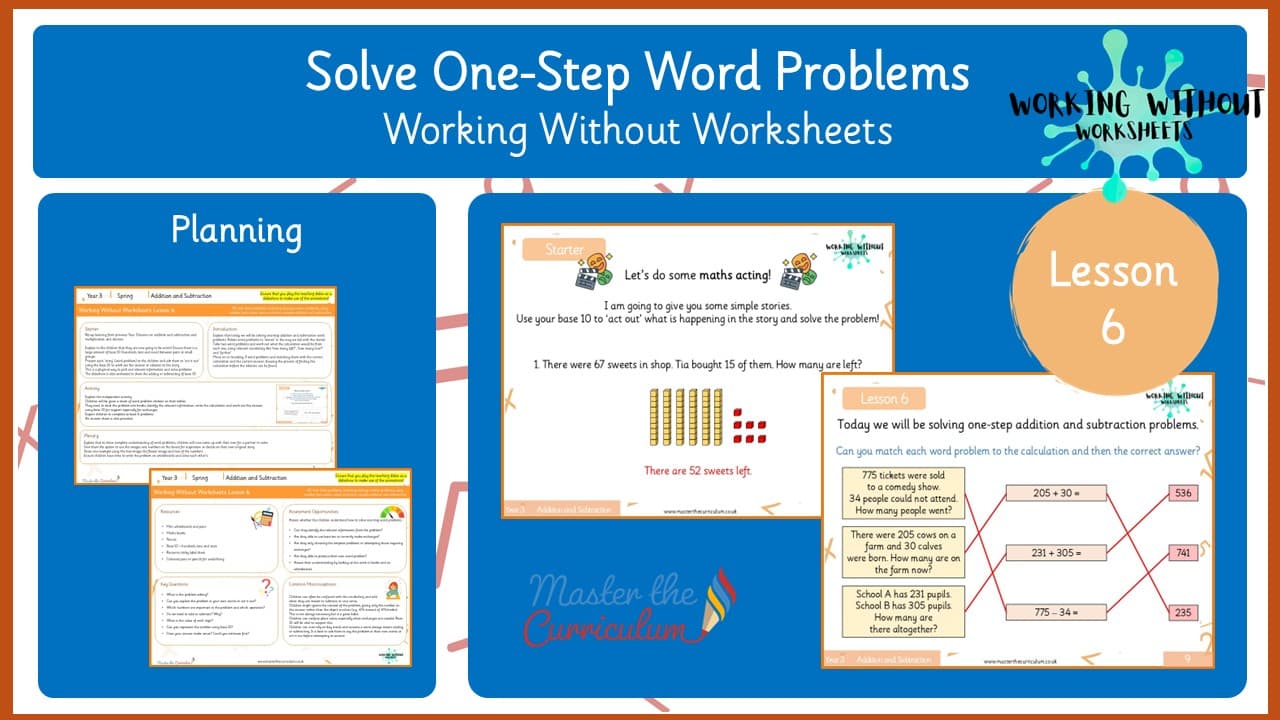
Addition & Subtraction
Y3
Addition & Subtraction
Y3
Addition & Subtraction
Y3
One email a week, for the year group you actually teach. Unsubscribe in a click.