Skip to content

Proposed version

Master the Curriculum

Working Without Worksheets

Y3

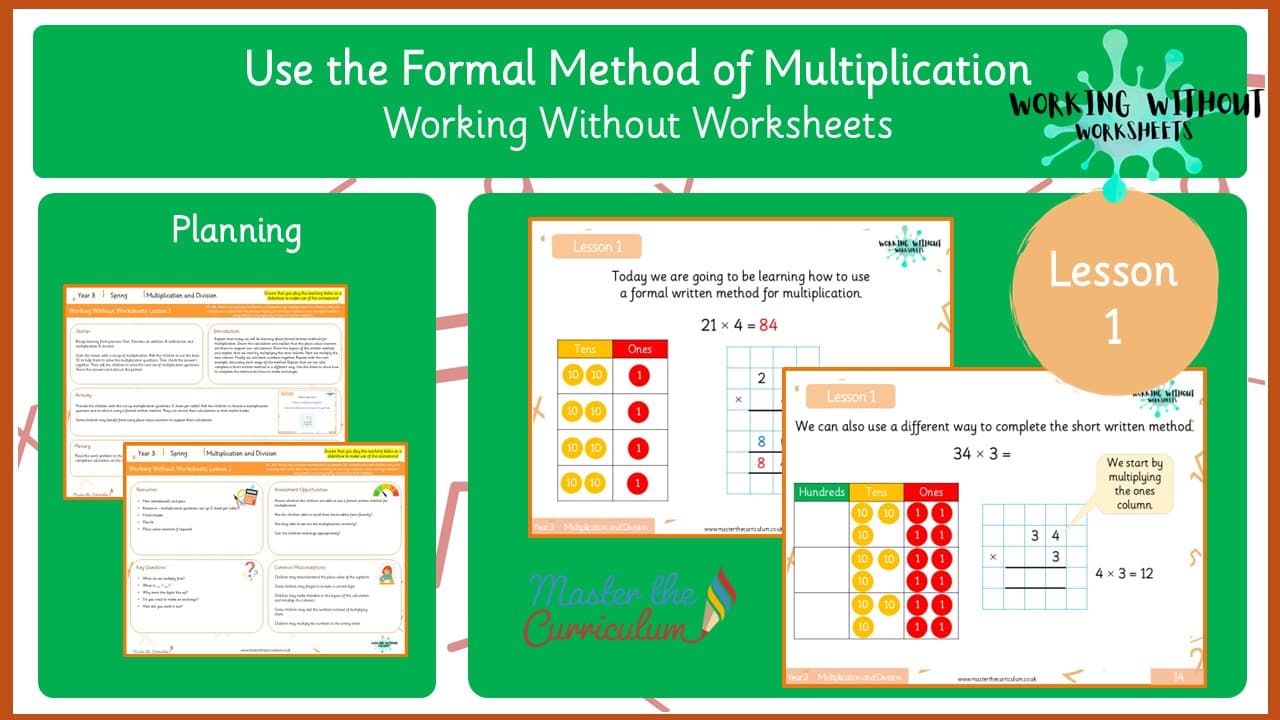
L1 Use the Formal Written Method for Multiplication

masterthecurriculum.co.uk3 levels

Preview only. The download is a fully editable file.

See inside

1 page shown before you download

Cover of L1 Use the Formal Written Method for Multiplication1Cover
Cover and first page

The rest of the pack

Planning, teaching slides and all three worksheet levels come with the download.

Year 3Working Without Worksheets

L1 Use the Formal Written Method for Multiplication

A detailed Year 3 maths lesson plan introducing formal written methods for multiplication, featuring practical activities, key questions, and assessment opportunities aligned with the National Curriculum.

Included with membership

Unlock with membership

Already a member? Sign in and it downloads from this page.

Keep it for later and group it with the rest of the block. No account needed to start.

  • Fully editable Word or PowerPoint file
  • Differentiated three ways
  • Instant download, no watermark

About this resource

This comprehensive Year 3 maths planning resource focuses on introducing formal written methods for multiplication within the Spring term Multiplication and Division unit. Designed to support a “working without worksheets” approach, this engaging lesson encourages pupils to deepen their understanding through hands-on activities, discussion, and visual representations. The lesson begins with a structured recap of prior learning, including multiplication, addition and subtraction, using place value counters and mental strategies. Pupils are then guided step-by-step through formal written multiplication methods, including multiplying ones and tens, aligning place value columns, and combining partial products accurately. Clear modelling and animated teaching slides help reinforce each stage of the process, ensuring pupils build confidence and conceptual understanding. Learners are given practical opportunities to apply their knowledge through differentiated activities, including solving cut-up multiplication problems and tackling word problems using formal written methods. The resource also highlights key assessment opportunities, common misconceptions, and effective questioning techniques to support mastery. Perfect for Key Stage 2 teachers, this lesson aligns with the National Curriculum objectives for Year 3, helping pupils progress from mental strategies to formal written calculations for two-digit by one-digit multiplication. Ideal for classroom teaching, intervention groups, or maths mastery approaches.Read more

This comprehensive Year 3 maths planning resource focuses on introducing formal written methods for multiplication within the Spring term Multiplication and Division unit. Designed to support a “working without worksheets” approach, this engaging lesson encourages pupils to deepen their understanding through hands-on activities, discussion, and visual representations. The lesson begins with a structured recap of prior learning, including multiplication, addition and subtraction, using place value counters and mental strategies. Pupils are then guided step-by-step through formal written multiplication methods, including multiplying ones and tens, aligning place value columns, and combining partial products accurately. Clear modelling and animated teaching slides help reinforce each stage of the process, ensuring pupils build confidence and conceptual understanding. Learners are given practical opportunities to apply their knowledge through differentiated activities, including solving cut-up multiplication problems and tackling word problems using formal written methods. The resource also highlights key assessment opportunities, common misconceptions, and effective questioning techniques to support mastery. Perfect for Key Stage 2 teachers, this lesson aligns with the National Curriculum objectives for Year 3, helping pupils progress from mental strategies to formal written calculations for two-digit by one-digit multiplication. Ideal for classroom teaching, intervention groups, or maths mastery approaches.

Show less

What you get, 6 files

  • PDFPlanning
  • PPTXPlanning, editable
  • PDFTeaching slides
  • PPTXTeaching slides, editable
  • PDFWorksheets, all three levels
  • PPTXWorksheets, editable

The standard small step pack, as her own modules ship it. We do not print page counts here, because her catalogue does not publish them and a guessed number is worse than none.

★★★ Differentiated three ways
  • Working towardsScaffolded, with the model or the bar already drawn.
  • Working withinThe expected standard for the year group.
  • Greater depthReasoning and explaining, not just more of the same.

Her own system, with the star count repeated in every worksheet header so a child can be handed the right sheet without a word.

The rest of this block

Working Without Worksheets, Year 310 numbered lessons

  1. Lesson 1 · you are hereUse the Formal Written Method for Multiplication
  2. Lesson 2Use the Formal Written Method for Division
  3. Lesson 3Use Known Number Facts to Solve Problems
  4. Lesson 4Count in Multiples of 100
  5. Lesson 5Solve Real-World Multiplication Problems

More working without worksheets for Year 3

Working Without Worksheets

Y3

L4 Read Analogue Clocks Accurately

masterthecurriculum.co.uk
4.47 reviews
Included with membership
Editable worksheetsWord and PowerPoint, so you can change anythingWhite Rose supportingFollows the small steps you already plan fromDownloadable lesson plansPlanning, slides and worksheets for every stepReasoning and problem solvingBuilt into every step, not sold separately

A free resource every Friday

One email a week, for the year group you actually teach. Unsubscribe in a click.

Year group you teach