
Geometry
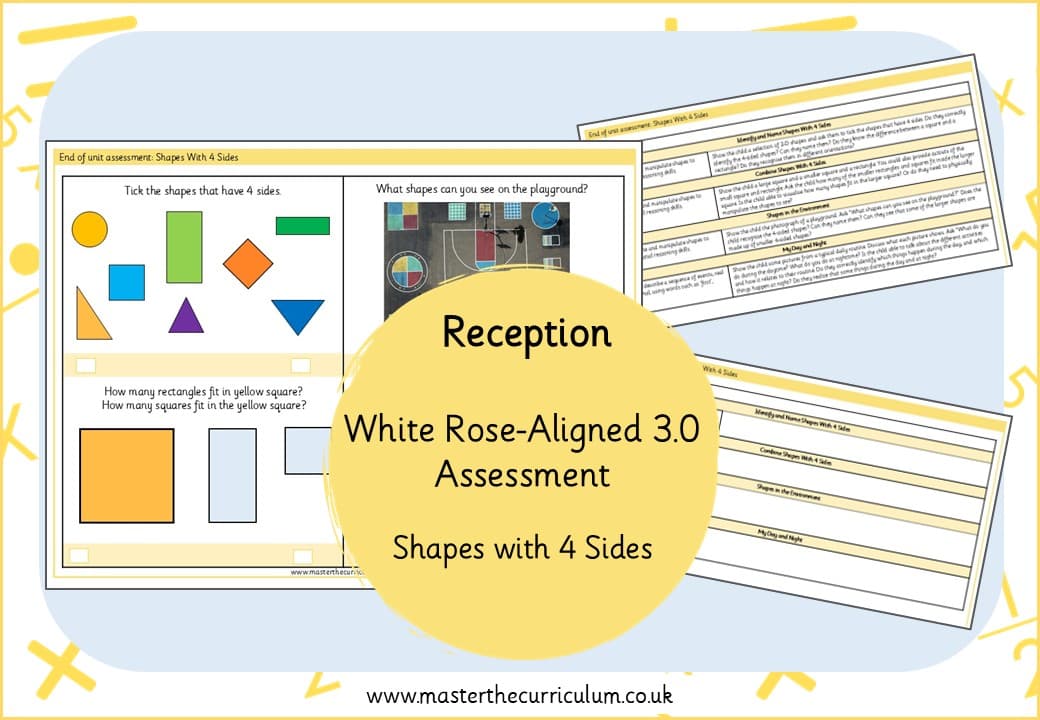
EYFSWhite Rose-Aligned 3.0 Assessment – Shapes with Four Sides
masterthecurriculum.co.uk
Proposed versionTrusted by primary teachers across the UK · New resources every week
Geometry
EYFS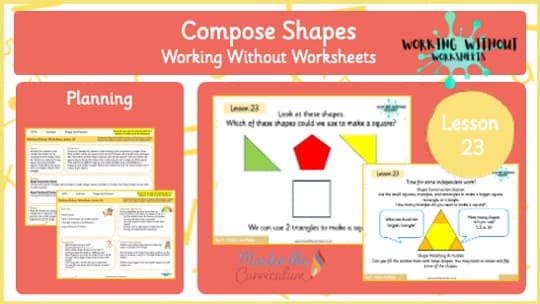
Preview only. The download is a fully editable file.
1 page shown before you download
1CoverThe rest of the pack
Planning, teaching slides and all three worksheet levels come with the download.
Reception Working Without Worksheets lesson on composing shapes. Includes planning, shape outline starter, modelling with triangles, and hands-on construction and puzzle activities.
Included with membership
Unlock with membershipAlready a member? Sign in and it downloads from this page.
Keep it for later and group it with the rest of the block. No account needed to start.
Working Without Worksheets – Reception Maths: Compose Shapes Introduce Reception pupils to the idea that larger shapes can be composed of smaller shapes with this Working Without Worksheets lesson. Children use squares, rectangles, triangles, and other 2-D shapes to explore how shapes fit together, rotate, and combine to create new ones. The lesson begins with a starter activity : Show an outline of a large square and provide smaller shapes. Model filling the outline with different combinations: e.g. a rectangle, a small square, and 2 triangles. Encourage discussion: “Which shapes fit? How can we combine them?” In the main input , children extend their understanding with new examples: Display another square outline alongside shapes: 2 triangles and a pentagon. Ask: “Which of these shapes could we use to fill the square?” Give children time to discuss and then model the solution using 2 triangles. Explore how triangles themselves can be composed in different ways—using a parallelogram, trapezium, or smaller triangles. Remind children they can rotate and flip shapes to make them fit. For the independent activity , children explore composition at two learning stations: Shape Construction Station – use small squares, rectangles, and triangles to create larger shapes (e.g. How many triangles make a square? ). Shape Matching & Puzzles – fill outline mats with larger shapes, rotating or flipping smaller ones as needed. The plenary brings the class together to discuss strategies: Share how children composed larger shapes and the combinations they discovered. Reinforce that shapes can combine in different ways, but still form the same whole. What’s Included in the Pack? ✔ Full teacher planning with objectives, modelling, and plenary questions ✔ Starter: fill a square outline using smaller shapes ✔ Teacher modelling: use 2 triangles to make a square, explore triangles with trapezium and parallelogram ✔ Vocabulary focus: compose, combine, rotate, flip, triangle, square, rectan
Show lessThe standard small step pack, as her own modules ship it. We do not print page counts here, because her catalogue does not publish them and a guessed number is worse than none.
Her own system, with the star count repeated in every worksheet header so a child can be handed the right sheet without a word.
Geometry, Early Years9 numbered lessons
Geometry
EYFSGeometry
EYFS
Geometry
EYFS
Geometry
EYFS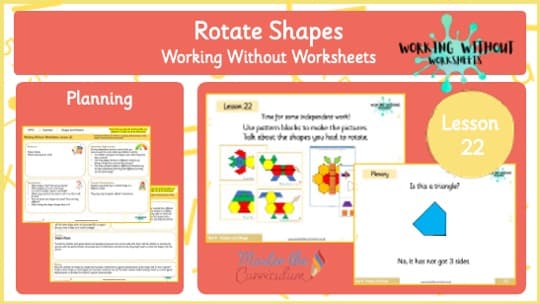
Geometry
EYFS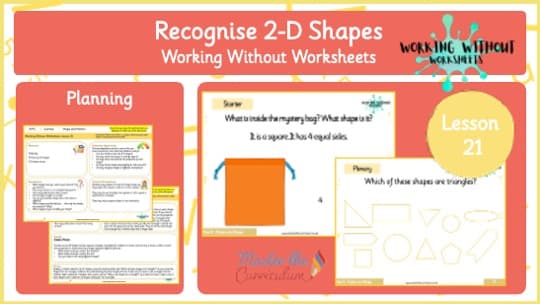
One email a week, for the year group you actually teach. Unsubscribe in a click.